Cutting back on safety expenses could amount to gambling with not only the health and well-being of workers, but also with profits and perhaps the company itself.
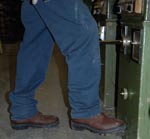
Manufacturing a protective boot that can meet exacting national standards is challenging enough. When the relevant industry adds its own performance testing to the mix, as the aluminum smelter industry around the world has done, the challenge grows — but this happens for all the right reasons.

At approximately 10 a.m. on March 25, 2009, an F-22 crashed northeast of Edwards Air Force Base, killing David Cooley, 49, of Palmdale, Calif., a 21-year veteran test pilot. During the days of World Wars I and II, this may have been all too common an occurrence with test pilot deaths occurring weekly, but today, with advances in safety and technology, a test pilot's death happens on the average of once every two to three years.
Being prepared for an unexpected disaster requires planning well in advance in order to manage any emergency situation. Whether it is a natural, weather-related, man-made, or technological disaster, the key to survival lies in your pre-disaster efforts. Taking the time to assess the company's functions, develop plans to keep the business operating, detail strategies to lead recovery, and conduct employee training can make the difference between survival or closure for a business.
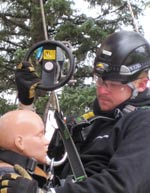
What is the big deal about constructing, operating, and servicing a wind turbine? Ask anyone who has been involved in this industry for more than 20 years, and he will describe a time that is different from today only in the breadth and scale of these renewable energy-generating machines.
Technologies have radically changed our lives, but our environments haven't kept up the same pace to ensure a healthy and productive workplace.
The new B101.1 floor safety standard will change the way you address the growing problem of slip-and-fall accidents.

Results from a study of construction workers' chest x-rays at Department of Energy (DOE) facilities from 1996 to 2006 indicated that, depending on trade, abnormal results were found in 11 to 25 percent of the workers studied. The prevalence of abnormal chest x-ray increased with age and years worked.
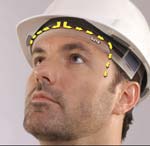
Sweating the small stuff can become a big problem. Clear vision is a must in order for your workers to be safe.
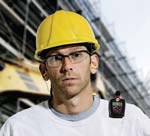
We must face the reality that hearing conservation efforts are interdisciplinary, integrated, and need leadership that executes a detailed and appropriate plan.

There will come a point during the upcoming American Society of Safety Engineers Professional Development Conference & Expo, June 13-16 in Baltimore, when visitors will have the opportunity to witness something close to what inspired Maryland native Francis Scott Key by that dawn's early light in 1814, when he penned the words of what would become our national anthem.
"When you're not thinking about your driving, your habits will kick in. If you've got good habits, your chances of having a collision are minimized. If you have poor habits, they're increased."
The majority of construction accidents are not due to a lack of training, skill or knowledge — nearly all accidents are simply related to poor decision-making.
Food safety is getting renewed attention from Congress and the two federal agencies chiefly charged with safeguarding the nation's food supply: the Food and Drug Administration (FDA) and the Food Safety and Inspection Service (FSIS) of the USDA.
In the past, cut-resistant gloves were treated as a commodity, with little training and education of wearers. Now, the emphasis is on information and communication.
Safety directors have good intentions when determining the types of safety eyewear to provide for their programs. After all, program managers are truly interested in protecting the eyes of their employees.

The Centers for Disease Control (CDC) tells us that proper hand washing is the single most important action each of us can perform to help stop the spread of diseases.