OSHA and other federal agencies track electrical accidents of all kinds, but not arc flash incidents specifically. The Institute of Electrical and Electronic Engineers (IEEE) and the National Fire Protection Association (NFPA) are working to change that through a collaborative research project to conduct extensive testing on arc flash. At present, only data on all electrical accidents are available.

Instead of focusing on safety (i.e., the avoidance of employee injury), many safety managers are focused on compliance (i.e., the avoidance of regulatory action taken against them). To put it another way, compliance-first is a mindset that asks, "What do I need to do to stay safe in the eyes of the government?" while a safety-first mindset frames the issue more simply: "What do I need to do to stay safe?"
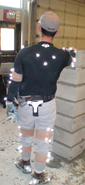
No two ways about it: Masonry is hard work and stressful on the body. Masonry workers have the highest rate of back injuries causing days away from work among all of the construction trades. The rate is more than one and a half times higher than the average rate for all construction workers.
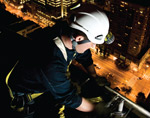
One of the questions most frequently asked is, "What kind of training do I need to be a Competent Person in regard to fall protection?" Although it seems like a straightforward question, the answer can be a little tricky. Many people believe the singular requirement to achieve Competent Person status is completion of a fall protection course, but it's just not that simple.
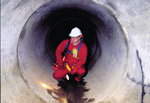
Confined space entry presents a potential hazard in numerous industries. Whether it is an inspection of an aircraft fuel tank, entering the hold of a barge, working in an underground utility vault, or cleaning a wine fermentation tank, education and safety are important when entering confined spaces.
Software-as-a-Service (SaaS) has proven itself in the health and safety sector: it saves money, simplifies IT objectives, and ensures customers are using the most current versions of software. Yet SaaS's strategic potential for the industry has yet to be mined. It's time to take a hard look at how SaaS could evolve to best serve the health and safety sector.
A key aspect of any EH&S compliance program is to make sure that for every documented problem, all steps taken to correct the problem are also documented. It does not matter whether the problem arose as a result of an incident report or as a result of an audit; managing, tracking, and documenting the steps taken to handle and correct the problem are just as important as solving the problem.
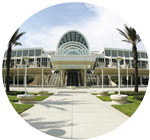
Anyone who has participated in any of the National Safety Council's 95 previous annual Congresses might have a hard time taking literally the theme of the 2009 version of the event: "Beyond Your Wildest Expectations." That's because most in the industry already recognize it as the biggest show in the safety kingdom, and this year, despite the execrable economy, the preliminary numbers are setting up to maintain that tradition.

Human behavior is often the focus of safety investigations. Managers and others are primarily interested in how to get people to do the right thing at the right time. Attention is generally given to risky actions taken by people. The desire is for people to be careful, to always watch out, to remember that everyone has a family at home and that risk recognition and management are personal responsibilities. But a key element is often missing from the equation: identification and control of causes that exist in conjunction with behaviors.
The 15th Annual National Ergonomics Conference and Exposition will take place Nov. 17-20 at Caesars Palace, Las Vegas, with its focus directed at helping businesses survive the downturn and prosper as the economy improves. Five educational tracks are featured (Program Management, Office Ergonomics, Industrial Ergonomics & Material Handling, Healthcare & Lab Ergonomics, and Design for the Aging & Diverse Workforce).
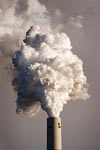
I'm fortunate to practice industrial hygiene for an employer with millions of square feet of space, the most aggressive modernization plan in decades, and a talented group of leaders, facility managers, engineers, technicians, and ES&H professionals.
Look at any company that operates a fleet of trucks and ask whether it pays attention to safety. Chances are good you'll find four basic elements in its program: equipment maintenance, hiring policies, training, and holding people accountable for accidents. But often missing is a fifth element that can make all the difference in accident rates: ensuring that drivers are motivated to operate safely.
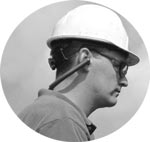
Tim Pope was immediately intrigued when he first saw the hearing protection device because it was unlike any ear plug or muff he'd ever seen. Pope, vice president and owner of rapidly growing tree service company Terry Tree Service, LLC, then saw the company's claims for the product — comfortable, totally passive hearing protection that allows conversation during use — and just had to try them.
They're the front lines and the heart of the nation's defense against the H1N1 flu, and the care they provide will be vital during the 2009/2010 U.S. flu season. How well the employees of about 5,000 hospitals can perform their duties may depend on those individuals' willingness to receive flu vaccinations, as health care professional associations and leaders of this year's Joint Commission Resources Flu Vaccination Challenge 2009-2010 strongly encourage.
Editor's note: Disaster readiness (DR) involves securing and safeguarding all corporate assets — employees, principally, but also data, facilities, and equipment. John Humphreys ([email protected]), senior director of Citrix's Virtualization and Management Division in Boston, Mass., said organizations are learning how virtualization can ensure their data centers are safe and remain operational in the event of a disaster. Humphreys discussed how this works in the following June 23, 2009, interview with OH&S Editor Jerry Laws.

The Globally Harmonized System, or GHS, was proposed by the United Nations in an effort to internationally standardize classification and labeling of chemicals through the use of pictograms, signal words, and hazard warnings. Benefits of the GHS include reduced time and costs involved in meeting multiple regulations for labels, improved comprehension and understanding of health and environmental hazards, facilitation of trade by removing barriers created by various health and safety requirements, and reduction of duplicate testing.