In the same way the demand for respirators challenged manufacturers after H1N1 influenza was declared a pandemic, glove and apparel orders soared once the spill began.
Loyola University Chicago recently became the first university to launch an electronic pre-plan program for fire emergencies.
Are you a safe driver? A courteous driver? A knowledgeable, experienced driver? Do you have a propensity for anxiety and road rage?
Industry professionals want features that enable them to create safety audits and inspections, surveys, scorecards, and more.
Round homes in Katrina's path sustained no structural damage from high winds or water, although many were hit with tidal surges of 20 to 30 feet.
Workers and safety managers increasingly seek footwear that provides metatarsal protection. Safety toe is still on top in sales, however.
A microtube that requires less force to open, coupled with a more ergonomic, perpendicular, and vertically extending tab, could reduce the occurrence of RSIs in laboratory personnel.
When you see a person down in a car, not breathing, your first instinct is to get him or her out of there. That instinct can prove deadly if followed, especially by someone who doesn't know how to protect himself.
Before the ANSI/ASSE Z359.7 standard, there was no person or entity an end user could turn to for compliance testing information on any piece of fall protection equipment.
Put an end to costly accidents with technology.
In one case, we had start over with the supervisors and painstakingly work down to the line employees to communicate the correct message that every bit of protection helps.
The IT/MIS model has more to do with configuration management and much less with the job at hand, with little thought given to people in the field.
Baltimore is known as a "City of Firsts" for good reason. In 1743, its Maryland Jockey Club became the first professional sports organization in the United States; in 1774, the city opened the first post office system in the country; in 1816, it became the first city to illuminate streets with hydrogen gas; and in 1920, its Rustless Iron & Steel Co. became the first factory to manufacture stainless steel. And that's just scratching the surface.
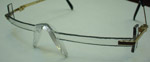
You'll find the new ANSI/ISEA Z87.1- 2010, American National Standard for Occupational and Educational Personal Eye and Face Protection Devices, is easier to understand and use than the 2003 edition, but don't be fooled into thinking it was a snap to finish it.
Companies and leaders alike are often quick to point to training deficiencies or lack of an established behavioral pattern (habit) as the root cause of accidents. Training seems to become the easy solution; or, worse, it is viewed as some sort of magic potion. Safety training can certainly be an answer, but is it the right answer?
The general consensus of those responsible for on-the-job safety is that unsafe acts cause most all on-the-job injuries. The safety field recognizes that companies with world-class safety have a certain culture in which people do not engage in the unsafe acts that result in an actual loss. Because most injuries result from human actions, the key battle in the safety war is for the minds of the workers.
Members of the Safety Equipment Distributors Association are bound for downtown Baltimore this month and the association’s 2010 Safety Leadership Forum in better spirits than a year ago. The event kicks off with a June 15 reception at 6 p.m., less than three hours after the expo of ASSE’s annual meeting has closed, which allows distributor members who exhibited there to attend the SEDA meeting economically, said Kaymie Thompson Owen, SEDA’s associate director.