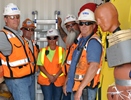
The members' emergency response backgrounds and their excellent reaction times to incidents are some of the team's biggest contributions to the project's safety program.
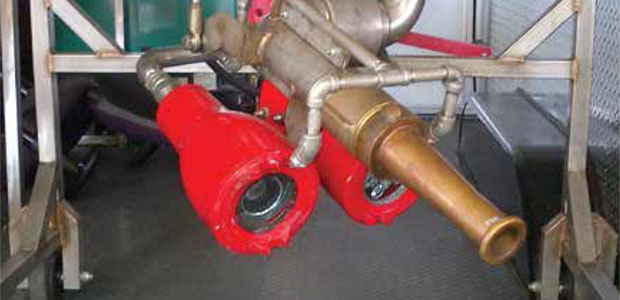
Several cleaning technologies are available. They greatly reduce the risk of slips and falls and equipment injuries from working inside tanks where water or cleaning solutions collect at the bottom.

Mixing novel technologies and methods with increased diligence in patient room decontamination is key to improving infection prevention.
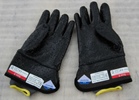
Specialty gloves designed to withstand the hazards of high-pressure jetting strikes must be used to prevent injury, and they can be used in other industrial applications where the operator is exposed to high-pressure fluids.
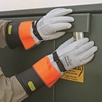
Lockout/tagout and rubber insulating gloves help to protect workers.
There are five hazardous waste management regulations that improve worker safety.

Safety is no longer "in the rear view mirror chasing upper management objectives." We are now leaders of the merged upper management team that runs the company.
The number of various federal laws and regulations makes it imperative for an institution to maintain some sort of compliance calendar or other tool to organize and manage the process.

Companies should work directly with an industrial vacuum supplier to assess facilities' needs and goals.
Person-worn safety monitoring devices ensure that no emergency incident is ever left undiscovered.
ANSI Z359.7-2011 took effect on Oct. 3, 2012. It applies to all products within the Z359 Fall Protection Code.
Using safety as a criterion for selection of employees, through the use of scientifically valid and legally defensible tools, can reduce organizational risks.
The online database offers a list of options for occupational hazards on construction sites.
This is key: Once the right risk assessment data is collected, it should be used to implement a long-term fall protection abatement program.
New wrinkles in hard hats include one sourced from sugar cane and another with an ultraviolet indicator to help the wearer determine when the hard hat should be replaced.
When your data shows a troublesome negative trend, rely on core safety principles that have worked throughout the years to get things turned around and your program back on track.

Once a company determines the need for a fall protection system, there are four options to evaluate: eliminate, prevent, restrain, and arrest.