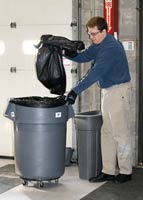
Recent studies show non-hospital-based workers have relatively high exposure rates to bloodborne pathogens. Vonachen Services Inc., a janitorial services contracting company with about 125 employees working in health care facilities, has built its BBP success through hands-on supervision and a strong training program.
Facilities that operate across multiple shifts face a significant challenge when it comes to maintaining the alertness of their employees. According to the National Sleep Foundation, "Sleep deprivation is greatest among shiftworkers, who average only 6.5 hours of sleep compared to 6.8 hours for people on regular '9 to 5' work schedules and 6.9 hours for all respondents."
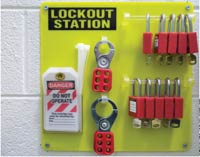
Severe burns from steam. Electric shock. Death when a machine cycles and a worker is caught and mangled. Burns. Destroyed and or disrupted lives of family. Damaged or destroyed equipment. Lost productivity. Add to all of these those dollars by the thousands that are paid out in worker’s compensation claims. Yet every day, somewhere, there is a lockout/tagout program beginning to slide that will result in some employee’s being injured or production’s being adversely affected.
Incentives have arrived. That’s stating the obvious when you consider American companies spend $32+ billion annually on merchandise sales for a variety of rewards, recognition, and motivation programs.
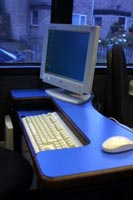
An earnings conference call and webcast Feb. 12 gave investors in NeuroMetrix Inc. (Waltham, Mass.) an update on the company’s continuing efforts to overcome reimbursement challenges facing its NC-stat nerve conduction testing device, which is used by thousands of doctors to diagnose Carpal Tunnel Syndrome cases. Our special report includes an interview with a Florida hand surgeon who uses the device and advice for optimizing computer workstations by 3M Workspace Solutions consultant and Certified Professional Ergonomist Thomas J. Albin.
Although the concept of proactively creating safe construction sites is widely agreed upon, achieving this reality has been traditionally lacking in execution. By combining the knowledge of professionals in both the construction and design facets of a project, safety can be enhanced before crews ever break ground. Doing this will yield a positive impact on not only worker safety, but also quality and productivity. Costs are lowered, task performance is improved, and life-threatening work hazards are reduced.
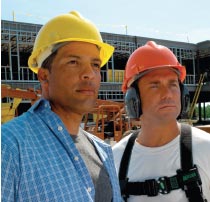
You don’t have to go far in any city or along an interstate highway to hear the sounds of new construction— office buildings, hotels, restaurants, shopping centers, and houses. And just as you can hear the loud sounds of cranes, pile drivers, nail guns, and jackhammers, so, too, can the workers who are raising these structures. In fact, it’s a lot louder for them. Are they wearing hearing protection? In many cases, the answer is no.
Though it’s hardly rare, new construction at a major health care facility is anything but “business as usual.” A building project can disrupt normal safeguards, create stress, and open pathways for infection. When an outpatient cancer care clinic embarked on a six-floor expansion in June 2005, health and safety and infection control professionals worked closely to develop and implement a detailed program to monitor and control airborne particulates.
Every safety program has the opportunity and responsibility to review selection, use, policy, and follow-up and to make those changes needed right now.
Few of us can imagine losing our hearing or vision, or the physical recovery from facial damage from an injury and the hardships this loss would cause to the injured or his/her family and relationships—from time, bills, and potential lost earnings alone. Yet these injuries are very common at the workplace and sometimes are shrugged off as the cost of getting the job done by employees and supervisors alike. What can we as safety leaders do to help drive home the message of always wearing appropriate PPE? And how can we keep our efforts on the front burner with upper management?
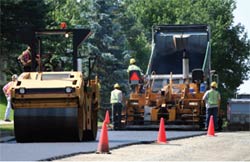
High humidity and high temperature are the key ingredients for a recipe of disaster if the body is not properly prepared to handle a hot environment. Whether exposure is a result of regular employment (such as in a foundry, steel mill, or other heated environment), fluctuating seasonal temperature changes (heat waves during the summer), or abruptly changing environments (such as vacationing or business travel), heat stress conditions can have a serious impact on one’s health and well-being.
The company behind a hand-held, FDA 510(k)-cleared automated nerve conduction testing device that is used by thousands of U.S. doctors to diagnose Carpal Tunnel Syndrome (CTS) is still trying to prove its value to insurers. NeuroMetrix Inc. of Waltham, Mass., said last October that about 5,500 physicians' offices and clinics use the NC-stat device in their practices, even as NeuroMetrix works to overcome reimbursement challenges.
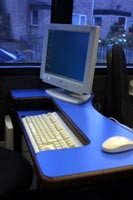
The ability to adapt the workplace to the size variation among computer workers is critical to both promoting users' comfort and protecting their health. While adjustable workstations are commonly thought of in terms of adjusting heights and depths to accommodate differences in sizes of users, it is also important to recognize the importance of adjusting computer workstations to accommodate differences in tasks.
Do you believe a person's mind can make him sick? Or, on the flip side, the way we think can potentially boost our health?
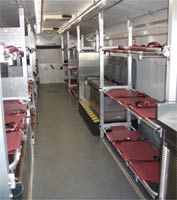
Last year, the 6,000-squaremile National Capital Region around Washington, D.C., which includes the Pentagon and offices for about 340,000 federal workers, received the first seven Mobile Evacuation Buses produced by High Point, N.C.’s Sartin Services Inc. Ed Sartin, the company’s president, said emergency responders in many jurisdictions are looking for vehicles that can accommodate multiple patients.

Question: One of our forklift truck operators recently complained of headache. I think he might have been overexposed to carbon monoxide (CO).
TradeFair Group Inc.'s Industrial Fire, Safety & Security conference is growing rapidly, in terms of attendance and exhibitors, and the 2008 edition (Feb. 6-8) offers a strong seminar lineup at Houston's Reliant Center. It has become a leading conference for Gulf Coast petrochemical emergency officials and vendors serving the energy sector.

Ergonomic hazards can get dicey when conditions turn icy. Here's some advice.
Cold is relative. Just ask a spouse. The old joke about Floridians firing up their furnaces while, in the same weather, Minnesotans are out gardening in shorts and flip-flops is funny because it's grounded in truth. What is refreshing to one can be uncomfortable to another.