Cutting Through the Safety White Noise
Is your jobsite drowning in signs? Learn how habituation dulls workers' attention and how to restore the impact of critical safety communication.
- By Cory Sherman
- Mar 27, 2026
Walk onto almost any construction site and you’ll see it immediately: hard hats required, high-visibility vests mandatory, fall protection zones, equipment exclusion areas, lockout/tagout procedures, confined space warnings, emergency muster points. Safety signage is everywhere. And yet, in many cases, it fades into the background.
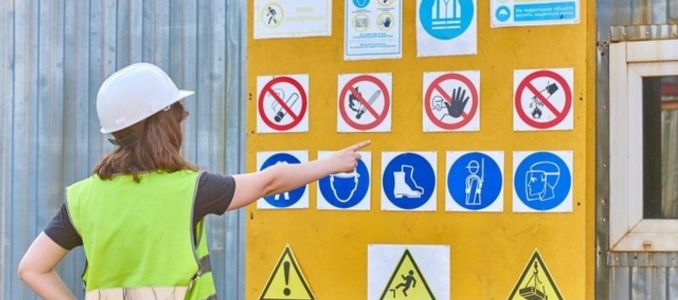
This is the paradox of modern construction safety: as companies increase communication and warnings to reduce risk, the sheer volume of messaging can create “safety white noise.” Workers stop noticing the signs. Toolbox talks become routine. Alerts lose urgency. Important warnings blend into the environment.
For an industry where conditions shift daily and hazards evolve by the hour, desensitization poses a real risk. The challenge is not whether to communicate safety; it is how to do so effectively without overwhelming the workforce.
The Psychology of “Habituation”
Human attention is selective. When the brain is repeatedly exposed to the same stimulus without consequence, it begins to filter it out. This natural process, known as habituation, is what allows us to ignore background noise in everyday life. On a construction site, however, that filtering mechanism can become dangerous.
Habituation can show up in subtle ways. Workers may walk past signage without reading it, treat daily briefings as routine formalities or dismiss alarms that once triggered urgency. When every message appears critical, none of them actually feels that way.
The problem isn’t a lack of concern.
The construction industry has made tremendous progress in reducing injuries and strengthening protocols. The issue is signal dilution: when essential warnings compete with too many other alerts. Adding more signs and more messaging does not necessarily improve safety outcomes; in fact, it can reduce their impact.
Companies should periodically audit their job site communication to determine whether it is clear, current and necessary. During such a review, leaders might ask:
- Are redundant signs conveying the same message in multiple places?
- Have temporary warnings remained posted long after conditions changed?
- Are critical alerts visually distinct from general reminders?
When signage reflects real-time, site-specific risks rather than generic rules, workers are more likely to engage with it. Streamlining communication can actually sharpen attention. Construction sites are dynamic environments. Static messaging often loses credibility if it fails to reflect daily realities.
A hazard present during steel erection may not exist during interior finishing; communication must evolve alongside the project. Morning briefings that focus specifically on that day’s high-risk activities can restore relevance. Updated hazard boards that identify active crane swings, energized systems or weather-related concerns signal that the information is timely.
Contextual communication conveys respect for workers’ intelligence and attention. Language and presentation also matter. Clear visuals, concise phrasing, and multilingual communication can ensure that warnings are accessible to the entire workforce. When messages are easy to understand, they are more likely to be remembered.
Tinkering With Toolbox Talks
Toolbox talks remain a cornerstone of construction safety culture. However, when delivered mechanically, they can become procedural exercises that fail to generate meaningful engagement. Shifting from lecture-style delivery to dialogue makes a significant difference.
Rotating speakers among crew members, encouraging workers to share near-miss experiences and focusing each session on one practical takeaway can transform these meetings from routine to relevant. When workers feel ownership over the discussion, attention increases. Safety becomes something they shape, not just something they are told.
One of the fastest ways to create white noise is to treat every communication as equally urgent. Companies should distinguish clearly between baseline safety requirements and immediate, high-risk alerts. This distinction can be reinforced through design and consistency. For example:
- Standardized signage for ongoing PPE and procedural reminders
- Distinct color schemes or visual markers for active hazard zones
- Unique tones for emergency alerts that are never used for routine notifications
When urgent signals are used sparingly and consistently, they retain their authority. Workers learn to respond immediately because they trust that the alert indicates real risk.
Safety messaging also loses power when leadership behavior contradicts it. If supervisors overlook minor violations to maintain production schedules, workers notice. If managers bypass protocols for convenience, signage becomes symbolic rather than substantive.
Companies that avoid safety white noise demonstrate alignment between message and action. Leaders model proper PPE use, stop work when conditions are unsafe, and communicate transparently about incidents and lessons learned. These visible behaviors reinforce that safety is a priority embedded in decision-making, not simply posted on a wall.
Thoughtful Use of Technology
Digital safety tools and wireless alert systems have become more common across construction sites. When used strategically, they can deliver precise, location-specific communication that cuts through background noise. However, technology must be applied with discipline.
Excessive notifications or redundant alerts across multiple platforms can quickly recreate the problem they were meant to solve. Alerts should be clear, actionable and reserved for situations that truly warrant attention. Precision builds credibility: overuse erodes it.
Perhaps the most effective way to combat safety fatigue is to involve workers directly in hazard identification and risk mitigation. When crews participate in daily job hazard analyses, report near-misses and conduct peer-to-peer observations, safety becomes collaborative rather than prescriptive.
Ownership shifts perception. A risk identified by a coworker carries more weight than a generic sign. Engagement also signals that safety is dynamic, shaped by real conditions and real people.
Companies that track engagement indicators, such as near-miss reporting and participation levels in safety discussions, often gain better insight into whether communication is resonating. Compliance metrics alone cannot reveal whether workers are truly attentive.
Construction will always involve complexity and inherent risk, so clear communication remains essential.
But clarity can be undermined when messaging becomes excessive, repetitive, or disconnected from real conditions. Avoiding safety white noise does not mean reducing commitment to safety; it means sharpening it.
By focusing on relevance, leadership alignment, worker engagement and disciplined communication design, construction companies can ensure that when a warning is posted or an alert is sounded, it commands attention.