OSHA has revised its Field Operations Manual to provide OSHA Compliance Officers with a single source of updated information and guidance to more effectively protect employees from occupational injuries, illnesses, and fatalities.
Designed for power systems professionals, the event will offer educational resources and networking opportunities with leading industry authorities, manufacturers, and suppliers.
"The need for educated and passionate new safety professionals is stronger than ever, since the majority of our experienced professionals are now phasing into retirement," said Chapter President Geri Cooley, MS, REM, CSP.
More than 25 residential homebuilders, together employing more than 1,600 employees, participate in the program.
The pact will target specific hazards, including falls, combustible dusts, trenching/excavation, 'struck-by' object hazards associated with local petrochemical and construction industries, and more.
The American Industrial Hygiene Association has announced its 2009 continuing education offerings. AIHA professional development courses are designed to provide practitioners with specialized skills that enhance performance on the job while increasing knowledge and professionalism.
The plan includes a set of five-year targets, including a 50 percent reduction in the incidence rate for health care-associated MRSA infections. Soon the agency will announce dates and locations of public meetings about the plan. Comments are due by Feb. 6.

The Feb. 17-18 conference at the National Labor College will examine challenges of the nation's aging workforce and begin developing approaches to help workers maintain good health as they age. Construction workers and others who perform taxing physical labor are a special focus of the conference.
A survey evaluation of trucking injury prevention materials from the Trucking Injury Reduction Emphasis through Surveillance (TIRES) Project found that 83 percent of respondents have made changes after receiving TIRES prevention materials and 82 percent have requested additional safety topics to be addressed.
The Dec. 31 belt air final rule requires this training and says the air monitoring must be the sole priority during an emergency incident.
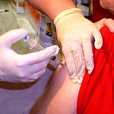
"With an increasing amount of care being delivered in outpatient settings, more patients will be put at risk unless clinicians are adequately educated and consistently adhere to infection prevention measures," said Kathy Warye, CEO of the Association for Professionals in Infection Control and Epidemiology.
The books contain several errors in the technical diagrams that could lead users to incorrectly install or repair electrical wiring, with shocking results.
Known as "PS-Prep," the program is intended to raise the level of employer preparedness by making DHS-adopted standards more widely available, among other measures.
The seven goals listed today start with making protecting workers on the job a top priority for President Obama and the 111th Congress. Goal 3: Count all occupational injuries and illnesses.
Depending upon the scope, complexity, and hazards associated with an incident, FEMA can activate OSHA to coordinate federal worker safety and health resources and technical assistance.
The National Safety Council (NSC) is introducing two new versions of its OSHA Walkthrough for Industry training program. Like the original program, these versions are designed for educating new employees or refreshing the expertise of seasoned staff.
The Federal Railroad Administration filed a final rule to adjust its ordinary maximum and aggravated maximum penalties to amounts authorized by the Rail Safety Improvement Act of 2008.

What better way to start 2009 than by joining forces to curb the high level of stress today's workers experience on the job?
The International Window Cleaning Association's annual convention will include a safety panel discussing high-rise issues, an IWCA safety certification review, and a full-day training session on Feb. 21.
Tower climbing has been called "the most dangerous profession." But Don Doty, chairman of the National Association of Tower Erectors, says the industry is much safer today than when NATE was formed. He discussed the turnaround and the state of safety in the industry in an Oct. 24, 2008, conversation and follow-up e-mail with Occupational Health & Safety's managing editor.