The Glastonbury, Conn., inspection begun in December 2007 identified several conditions that had earlier been cited at Monro locations in Massachusetts and New Hampshire.

As rising floodwaters continue to destroy homes and threaten communities across much of the Midwest and West Virginia, the American Red Cross urges affected residents to register themselves online.
Two repeat violations with penalties of $27,500 are being proposed for violations similar to those noted during earlier inspections in 2007.
The Springfield, Ill.-based facility, which houses an office, warehouse, and woodshop, has been inspected by the agency on two occasions since January 1995.
”Dr. Jim Ramsay epitomizes the work ethic, the professionalism, and the spirit of contribution and cooperation necessary for educators to play in the field of safety,” said Mark A. Friend, Ed.D., CSP, of Embry-Riddle Aeronautical University, who nominated the winner.
The U.S. Department of Labor's Mine Safety and Health Administration is distributing its latest version of audio public service announcements aimed at educating miners and mine operators about the hazards typically found in the mining workplace.
“Improving communication is our goal,” said Warren K. Brown, CSP, ARM, CSHM, now poised to become the society’s 94th president.
“Don’t let the message get old. Information is not like wine—it doesn’t get better with age. It’s like bread,” said Robert Cialdini in his keynote presentation at this morning’s general session.
"We’re talking about more than just a paper program. It’s the kind of program that can reduce worker’s comp costs and illnesses and injuries, making the companies more productive and more competitive,” said OSHA chief Edwin G. Foulke today.
An emeritus professional member and ASSE fellow, Lawrence E. Oldendorf has volunteered in the society’s programs for more than 40 years.
Using a set of 24 standardized core questions designed to diagnose a company’s safety culture, the survey measures a cross-section of responses from an organization’s employees and supervisors.
EPA is amending the F019 listing to facilitate the use of aluminum in automobiles, light trucks, and utility vehicles.
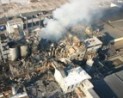
Correspondent Scott Pelley's segment on the problem of dust explosions will include interviews of former CSB Chair Carolyn Merritt and OSHA chief Edwin Foulke Jr. This CSB photo shows the damaged Imperial Sugar plant.
The library houses resources from around the world related to preventing road traffic injuries and deaths at work. The resources are stored in the "Road Safety at Work" online library, www.roadsafetyatwork.org.
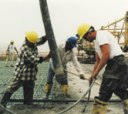
From 1992-2006, a total of 11,303 Hispanic workers died from work-related injuries. The death rate for Hispanic workers was consistently higher than the rate for all U.S. workers, and the proportion of deaths among foreign-born Hispanic workers increased over time.
The department conducted six public hearings on the proposed rule and made changes to the final rule in response to hundreds of comments.
“When companies are planning major strategic activities, the consideration of environmental risk remains the exception rather than the rule," according to Karl Russek, senior VP for ACE Environmental Risk.

The department began studying Yucca Mountain in 1978 to determine whether it would be suitable for the nation's first long-term geologic repository for spent nuclear fuel and high-level radioactive waste.