The DOT inspector general testified Sept. 10 that the department's leadership has directed PHMSA to implement an action plan, but oversight of permit holders' safety compliance remains an issue.

The agency has published proposals to identify the group as Substances of Very High Concern because of their carcinogenic, mutagenic, and/or reprotoxic properties and potentially serious effects on human health, or for persistent, bioaccumulative environmental effects. Comments to ECHA are due by Oct. 15.
"Our Coast Guard crews face risks each and every time they respond to a call--including hoax calls and reports of abandoned or adrift vessels," said Cmdr. Phillip Thorne, chief of the response department at Sector Northern New England. "Not only do these cases put responsible mariners in danger, the time and resources expended are a needless waste of money."
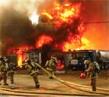
At a public meeting in Jacksonville, CSB investigators will present their final report on the batch reactor explosion that killed four workers and injured 32 people Dec. 19, 2007.
The settlement is related to a release at the company’s ammonia and nitric acid manufacturing facility in Deer Island, Ore., on Sept. 29, 2008. EPA alleges that the company failed to notify the appropriate emergency response entities until approximately 11 hours after the release occurred.
Exposure to high levels of xylene and ethylbenzene can cause a variety of human health effects, including harm to the nervous system, fatigue, general weakness, memory loss, and visual problems.
In addition to issuing willful, repeat, and serious citations to the company, OSHA also issued it a notice of failure-to-abate citation relating to its failure to implement a respiratory program, institute a medical surveillance program for workers overexposed to chromium VI, and develop and implement a hazard communication program for workers exposed to caustics and corrosives.
For the first quarter of 2009, the agency's Disability Rights Office received 142 informal complaints raising closed captioning issues but no complaints regarding hearing aid compatibility issues.

The agriculture and health ministers announced Friday the addition of 166 new food safety staffers, 24/7 availability of health risk assessment teams, and improved tracking of food illnesses through a national surveillance system.
Work continues on new approval criteria for various respiratory categories, and the branch chief at NPPTL asks whether users have additional needs that NIOSH could address.
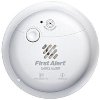
The upcoming rule from the State Fire Marshal requiring dual sensor smoke detectors affects new homes, dormitories, and multi-unit residential buildings.
"Workers exposed to occupational hazards requiring head, foot, or eye and face protection will now be provided protection based on a standard that reflects state-of-the-art technology and materials," said acting Assistant Secretary of Labor for OSHA Jordan Barab.
A follow-up OSHA visit found uninspected overhead cranes; uninspected lifting hooks; defective and unmarked lifting slings; unguarded live electrical parts; damaged electrode holders and insulation; incorrectly stored compressed gas cylinders; unmarked and unchecked fire extinguishers; and slipping hazards from an oil spill in a work area.
"OSHA has inspected this company on five occasions going back to 1997, resulting in numerous violations, including many we found again on this most recent inspection," said OSHA Area Director Kathy Webb, North Aurora, Ill.
In addition to overarching policy discussions, the summit agenda will include topical discussions of product safety issues, with toys, lead in children's products, all terrain vehicles, lighters, and fireworks representing specific product areas where systemic progress may be made. A special, full-day program is planned for ATV issues.
“Current rates of health care worker immunizations are appallingly low and must not be tolerated,” said APIC President Christine J. Nutty, RN, MSN, CIC. “It’s time for hospitals to require flu shots--and hold employees accountable for declining the vaccine.”
Some other establishments that did not answer an OSHA Data Initiative survey also will be targeted. The agency said its intent is to deter employers from not responding to avoid inspection.
“Disasters may strike at any time so it’s always important to be ready and prepared to maintain the health and safety of yourself and your loved ones until first responders are able to arrive,” said AADM President Gary M. Klein, M.D., MPH, MBA, CHS-V.
"I want to keep people in the loop and let them know it’s not over. I want people to leave the presentation with the idea that this is something that can really happen and can affect their business and company, and they need to take protective measures,” said Larry D. Riley, compliance consultant with the Workplace Safety Awareness Council, who will present “The Swine Flu Pandemic: Urban Myths and Real Solutions for Your Facility” at the event.
Cook Children's Health Care System of Fort Worth, Texas, has boosted its employees' flu vaccination rates from 66 percent to 84 percent in the past two years.