Very few individuals, families, companies, hospitals, cities, or even countries are properly prepared to prevent or minimize the human morbidity and mortality, the social disruption, and the economic consequences caused by the results of an H5N1 avian influenza pandemic.

It's not that uncommon to be allergic to work, or at least to the workplace, says the American Academy of Allergy, Asthma & Immunology.
EXPOSURE to high levels of hydrogen sulfide gas is a well-documented and understood hazard. OSHA and NIOSH standards have long recognized this acute risk with appropriate short-term maximum exposure levels for workers. However, long-term, chronic exposure to low levels of hydrogen sulfide is not as well understood.
No new bronchiolitis obliterans cases since 2003 among microwave popcorn manufacturing workers have come to its attention, OSHA said in its notice announcing the meeting.

OSHA announced yesterday that it is taking three actions that will address concerns regarding diacetyl exposure in the workplace.
Kent Peterson's first dispatch discusses a Beijing conference in August, the 22nd International Conference of Refrigeration, where he learned CO2 is gaining popularity in Europe as a refrigerant.

IN the world of gas detection, one fact stands out above all else: Gas monitors are made to protect and preserve your life. And while serving as a life-saving device, they can be considered a multi-purpose tool in many other ways, as well. For example, they can be used to monitor a confined space prior to entry to ensure the area is safe for anyone entering the space.
The National Academics convened a committee of experts in chemical and bio agents, building design, indoor airflow, and risk assessment to study the issues.
The Teamsters and the United Food and Commercial Workers petitioned for the same emergency standard in July 2006 but say OSHA hasn't moved. Thirty-five deans and professors of public health and safety supported this latest letter.
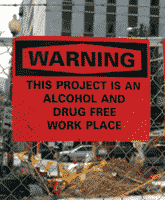
The trends between alcohol and drug use in the workplace are interesting. According to a recent study funded by the National Institute on Alcohol Abuse and Alcoholism, about 15 percent of U.S. workers, or 19.2 million workers, are under the influence of alcohol at least occasionally while on the job. Managers are more likely impaired on the job than are their reports.
ATHLETES and steroids have become a sad combination in modern Olympic and professional sports worldwide. It seems as if a day cannot go by without some reported scandal of an athlete abusing steroids or some other performance-enhancing compound to gain a competitive advantage.
The American Industrial Hygiene Association (AIHA) is accepting proposals for professional development courses (PDCs) to be held Saturday and Sunday, May 31–June 1, 2008, in conjunction with the 2008 American Industrial Hygiene Conference & Expo (AIHce) in Minneapolis.
EPA is holding a public meeting today at Holiday Inn Rosslyn at Key Bridge, 1900 North Fort Myer Drive, Arlington, Va., from 9 a.m. to 4 p.m. to discuss and receive comments on the development of the voluntary Nanoscale Materials Stewardship Program (NMSP) under the Toxics Substances Control Act (TSCA), which was first announced in the July 12, 2007, Federal Register
EACH day, hazardous chemicals and potential risk of worker exposure is becoming a more complex challenge for many environmental, health and safety professionals. Statistics show that the respiratory condition in the workplace is one of the main cause of illness cases on the job (18,865 cases in 2003; 17,679 cases in 2004; and 20,128 cases in 20051).
AMID concern for profit and production, employee health is often overlooked in the occupational setting. One method of maintaining worker health is through the implementation of work site medical surveillance, which is the endeavor to ensure continued medical fitness of a worker through periodic examination and diagnostic processes. Several recent accounts of negligence in medical surveillance are offered.
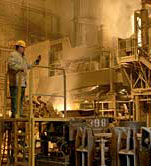
WHEN used independently of each other, the words industrial and hygiene could be construed as polar opposites. Industrial conjures up pictures of manufacturing plants, steel mills, production lines, and generally rough environments. Hygiene, on the other hand, is defined as a science of the establishment and maintenance of health.
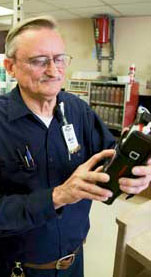
ACCORDING to the National Human Activity Pattern Survey (NHAPS) as referenced by EPA, Americans spend about 90 percent or more of their time indoors. For this reason, the quality of our indoor air should be of great concern, whether it is in a home, a workplace, or a school, hospital, or medical facility--virtually any indoor environment. Poor indoor air quality can lead to a variety of health problems for any building occupant, especially at-risk populations (those younger than 2 or more than 70 years of age, immune system-compromised individuals, asthmatics, or those with severe allergies).