The safety and health issues of this large workforce are the focus of its work with the Retail Industry Leaders Association.
OSHA's San Antonio Area Office initiated a safety and health inspection on July 28, 2010, at the company's facility following a complaint that employees were being stuck by hypodermic needles while sorting trash that was to be recycled.
IAFC has submitted a series of proposals via the NFPA code change process to update NFPA 72 with the specific intent to provide solutions to the problems caused by the number of false alarms in commercial facilities.
Of the 71 mining fatalities reported, 23 of those victims were killed in surface mining accidents, while 48 miners died in underground mining accidents, 29 of whom were killed in the explosion at the Upper Big Branch mine in April.

Several organizations are working with TRANSCAER, the voluntary national program helping responders and communities prepare for hazmat transportation incidents, as it begins a yearlong training effort in Stockton, Calif.
Bidding to help more than 9,600 sand, gravel, and crushed stone mines in the United States, Puerto Rico, and the Virgin Islands, “Safety Pro in a Box” includes modules on various hazards.
“This is a unique opportunity to hear from small business leaders on how to achieve management commitment and employee participation in safety and health,” said Michael Wood, Oregon OSHA administrator.
Under the new rule, vehicle manufacturers must develop a countermeasure for light passenger vehicles under 10,000 pounds that prevents the equivalent of an unbelted adult from moving more than 4 inches past the side window opening in the event of a crash.
CPR training in schools should cover several key areas, including how to recognize an emergency, an emphasis on high-quality chest compressions and skills practice, according to the advisory.
The Technical Assistance Grants (TAG) program, in its third year, provides funding for engineering and scientific analysis of natural gas and hazardous liquid pipeline safety, as well as to foster open communication between the public and pipeline operators on pipeline safety and environmental protection.

The European Chemicals Agency, ECHA, announced that 3,114,835 notifications of 24,529 substances for the Classification and Labelling Inventory, either hazardous or subject to REACH registration, were submitted by the midnight Jan. 3 deadline.
The agency issued the recommendations following the Aug. 9 plane crash that killed former Sen. Ted Stevens and five other passengers.
The serious violations include failing to provide properly constructed scaffolds and provide supports to hold piping.
Time's running out to register and take part in the National Conversation on Public Health and Chemical Exposures, a two-day web forum presented by ATSDR that will take place Jan. 5-6.
The summit's goal is to produce a strategic plan that can be used to address issues, challenges, and concerns about volunteerism critical to the future of the emergency-response community and to the financial well-being of the nation.

You can leverage MSDS data and tools to create greener, safer products and workplaces.
Moderately and morbidly obese persons face many health issues--heart disease, diabetes, hypertension, stroke, gallbladder disease, and others. Now, increased chances of dying while driving during a severe auto accident can be added to the list.
According to the most recent U.S. Consumer Product Safety Commission statistics, there were 74,000 sledding, snow tubing, and tobogganing-related injuries treated at hospital emergency rooms, doctors' offices, and clinics in 2004. But by taking a few precautions, you can help your children make sure their sledding and snow tubing activities are both thrilling and safe.
It's the peak season for snowstorms, and snowblowers are working overtime. But Loyola University Health System hand surgeon Dr. Randy Bindra cautions that snowblowers can cause severe hand injuries, including loss of fingers that can require one or more surgeries and months of rehabilitation.
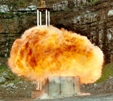
Stakeholders seeking control measures to minimize the probability and severity of combustible dust incidents should work more closely with the fire service.