The Consumer Product Safety Commission and the Department of Housing and Urban Development are issuing an updated remediation protocol for homes with problem drywall. A study conducted on behalf of CPSC by Sandia National Laboratories in New Mexico, finds no evidence of a safety hazard to home electrical systems.
As new visits for drug-related poisoning in the United States continue to rise, the American College of Emergency Physicians and the American Association of Poison Control Centers are raising awareness about the dangers of drug poisoning as part of Poison Prevention Week (March 20-26).
OSHA cited 17 serious safety violations, including failing to use lockout/tagout procedures of energy sources, guard open-sided floors and platforms, and provide standard railings for fixed stairways.
The Consumer Product Safety Commission recently went live with the SaferProducts.gov database mandated by Congress, as part of the Consumer Product Safety Improvement Act. Consumers are encouraged to submit reports of harm or risks of harm, and to search for safety information on products they own or may be considering buying.
One employee died and another was hospitalized after wet, heavy soil collapsed into a deep trench while the men were installing a sewer pipe.
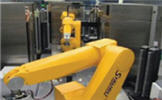
Several federal agencies, including the National Institutes of Health, recently unveiled a new high-speed robot screening system that will test 10,000 different chemicals for potential toxicity.
As part of its Topical Fire Report Series, the U.S. Fire Administration has issued three special reports that examine the risk of death or injury from fire by various demographics, such as age, race, and gender.
The rule covers workers who voice concerns related to nuclear and environmental safety or security under clean air and water, safe drinking water, solid waste, and toxic substances, among others.
The serious violations involve failing to properly implement a lockout/tagout program for energy sources, provide adequate guarding of belts and pulleys, and provide proper storage of flammable materials.
To some degree, the total may be tied to the economic downturn and increased unemployment.
OSHA's Houston South Area Office began its investigation on Sept. 14, 2010, at the company's South Freeway facility, where an employee died after a pallet-pulling machine came loose and struck him on the head.
The proposal would require railroads to establish toll-free telephone numbers to allow the public to report malfunctioning highway-rail grade crossing warning signals, disabled vehicles blocking crossings, or any other unsafe conditions at crossings.
In August 2010, anhydrous ammonia leaked out of a 12-inch pipe located on the roof of a Millard Refrigerated Services facility, due to hydraulic shock within the pipe.
A new study that will look at possible health effects of the Gulf of Mexico's Deepwater Horizon oil spill on 55,000 cleanup workers and volunteers began recently in towns across Louisiana, Mississippi, Alabama, and Florida.
Results of the survey will help NIOSH better understand the extent to which health care workers may be exposed to chemical agents such as antineoplastic agents, anesthetic gases, surgical smoke, high-level disinfectants, chemical sterilants, and aerosolized medications.

Traffic reports, CPR guidance, chemical safety data sheets, an OSHA general industry standards guide, and many more resources are a touch away.
FEMA's U.S. Fire Administration recently issued a special report examining the details of firefighter injuries sustained on the fireground or while responding to or returning from a fire incident. The report, titled "Fire-Related Firefighter Injuries Reported to NFIRS," was developed by USFA's National Fire Data Center.
Based on a series of seven focus group interviews the researchers facilitated in Belgium, it was suggested that workers' perceptions of risk are rarely taken into account when considering workplace prevention programs.
Cal/OSHA penalized the hospital for having an ineffective training program, incomplete and inadequate procedures to deal with safety concerns, and an “incomplete and untimely hazard correction for workplace violence exposures in the emergency department.”
The hazards included failing to install and maintain electrical equipment that was safe for a hazardous location, not replacing pressure relief devices on the oil separator for an ammonia refrigeration compressor, and failing to develop a written emergency action program.