A survey evaluation of trucking injury prevention materials from the Trucking Injury Reduction Emphasis through Surveillance (TIRES) Project found that 83 percent of respondents have made changes after receiving TIRES prevention materials and 82 percent have requested additional safety topics to be addressed.
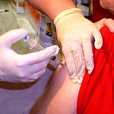
"With an increasing amount of care being delivered in outpatient settings, more patients will be put at risk unless clinicians are adequately educated and consistently adhere to infection prevention measures," said Kathy Warye, CEO of the Association for Professionals in Infection Control and Epidemiology.
The books contain several errors in the technical diagrams that could lead users to incorrectly install or repair electrical wiring, with shocking results.
Known as "PS-Prep," the program is intended to raise the level of employer preparedness by making DHS-adopted standards more widely available, among other measures.
The Food and Drug Administration recently approved the cobas TaqScreen MPX Test, the first nucleic acid test that screens for the presence of two divergent types of HIV in donated blood plasma and tissue.
The seven goals listed today start with making protecting workers on the job a top priority for President Obama and the 111th Congress. Goal 3: Count all occupational injuries and illnesses.
The Consumer Product Safety Commission (CPSC) recently announced that Lasko Products Inc., of West Chester, Pa., has agreed to pay a $500,000 civil penalty. The penalty, which has been provisionally accepted by the Commission, settles allegations that the company failed to immediately report incidents about its defective portable fans.
Depending upon the scope, complexity, and hazards associated with an incident, FEMA can activate OSHA to coordinate federal worker safety and health resources and technical assistance.
The National Safety Council (NSC) is introducing two new versions of its OSHA Walkthrough for Industry training program. Like the original program, these versions are designed for educating new employees or refreshing the expertise of seasoned staff.
The alleged violations include everything from the illegal transportation, treatment, and disposal of hazardous waste and other pollutants to conspiracy and mail fraud.
The Federal Railroad Administration filed a final rule to adjust its ordinary maximum and aggravated maximum penalties to amounts authorized by the Rail Safety Improvement Act of 2008.
In cooperation with the U.S. Consumer Product Safety Commission, Notifier, of Northford, Conn., has announced a voluntary safety recall of about 2,000 Notifier Fire Alarm Control Panels.
OSHA has cited Lloyd Industries Inc. for violations of the Occupational Safety and Health Act, and has proposed a total of $140,760 in penalties. The Montgomery facility, which manufactures fire and smoke dampers, has 50 employees.

According to the American Association of Neurological Surgeons (AANS), every year, thousands of adults and children are treated at U.S. hospital emergency rooms for head and neck injuries related to winter sports. As a result, many people are left with permanent health problems, are paralyzed, or lose their lives.
The U.S. Consumer Product Safety Commission, in cooperation with Atomic Skis GmbH, of Austri, have announced a voluntary recall of the Alpine Ski Bindings.

What better way to start 2009 than by joining forces to curb the high level of stress today's workers experience on the job?
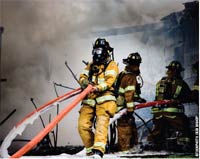
Smoke was billowing from the third-floor fire escape stairway of a hospital at 5 p.m. on a Friday. It is a scene I will always remember: Someone pulled a fire alarm, and soon the professional firefighters were dragging hoses as employees responded with hand-held fire extinguishers. Patients were moved to other floors, quickly and expertly. Years of training had come together in a fast facility response.
Tower climbing has been called "the most dangerous profession." But Don Doty, chairman of the National Association of Tower Erectors, says the industry is much safer today than when NATE was formed. He discussed the turnaround and the state of safety in the industry in an Oct. 24, 2008, conversation and follow-up e-mail with Occupational Health & Safety's managing editor.
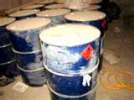
A proposal out for comments will allow for the enforcement of the European Regulation on the Classification, Labelling and Packaging of Substances and Mixtures, which adopts the internationally agreed Global Harmonized System on the classification and labeling of chemicals.
211 counties and parts of counties in the U.S. do not meet the agency’s PM 2.5 standards.