Due to the number of repeat violations cited, the company has been added to OSHA's Severe Violator Enforcement Program.
This one is focused on slips, trips, and falls and is sponsored by OSHA, the Southeastern Line Constructors Chapter of the National Electrical Contractors Association, Southeastern Line Constructors Apprenticeship and Training, and districts 5 and 10 of the International Brotherhood of Electrical Workers.

The Cal/OSHA campaign during summer 2010 reached out to low-wage, non-English-speaking outdoor workers in the state's hottest regions through media coverage, billboards, posters, ads on lunch trucks and vans, and radio ads.
For every four to five reported cases of mesothelioma worldwide, at least one case goes unreported, according to a study in the journal Environmental Health Perspectives.
Three repeat and two serious citations against a New Jersey firm included $58,080 in proposed penalties.
OSHA issued willful citations alleging that Gerardi failed to properly protect workers from trench cave-ins, the result of four separate inspections conducted under the OSHA Trenching and Excavation Special Emphasis Program.
Designing to achieve the desired reduction in noise without excessive capital cost and negative operational impact is often a delicate balance.
Assistant Secretary of Labor for Occupational Safety and Health David Michaels, Ph.D., MPH, has appointed Jim Maddux as the new director of the agency's Directorate of Construction, effective Monday, Dec. 20, 2010.
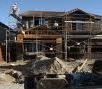
Recommended by the Advisory Committee on Construction Safety and Health, the National Association of Home Builders, and the Occupational Safety and Health State Plan Association, this change took effect immediately. Its enforcement effective date is June 16, 2011.
The National Demolition Association said more than 2,000 eLearning courses are offered in its new online training system.
L.F. Driscoll Co. of Bala Cynwyd, Pa., is building an inpatient and diagnostic wing on The Children's Hospital of Philadelphia that will expand a busy cardiac center and one of the largest pediatric oncology centers in the country.
Semiannual agendas published Monday in the Federal Register are later than usual. Those from the Labor Department's units are sparse.

Evaluating the equipment, engineering controls, and grinding methods currently used for manual concrete surface grinding, a study published in JOEH says current methods to control dust aren't sufficiently protective.
The deadline to comment on the 582-page document is April 4, 2011, and government safety agencies are urging employers and workers to participate as Australia moves toward harmonized regulations.
"The size of these proposed fines reflects the gravity of these hazards and the fact that two of the employers knew cave-in protection and a ladder were required, yet refused to provide these vital safeguards," said Rosemarie Ohar, OSHA's New Hampshire area director.
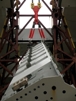
Slings enable lifts of sections weighing as much as 2.6 million pounds for the tower sections of the reconstructed San Francisco-Oakland Bay Bridge.
As a result of its inspection, OSHA issued Roth Metal Works one willful citation for failing to stabilize the steel beams and four serious citations for the lack of fall protection and scaffold hazards.
The Jan. 25-26 event at Houston's George R. Brown Convention Center will cover the principal causes of damage to underground utilities from excavation projects.
In a Nov. 18 decision that was a case of first impression, the commission held that a company's change in legal status does not prevent a repeat violation from being upheld against the successor company.
The company received citations for failing to maintain a safety program, fully plank scaffold platforms, provide a ladder for safe scaffold access, remove and replace damaged scaffold components, and properly brace scaffolds with cross braces.