AS dangerous jobs go, the world of working with electricity might not seem the most romantic. Unlike firefighting or law enforcement, electricians are not often featured in blockbuster movies as heroic, brave saviors of the street. But working with electricity can be comparatively dangerous, and the injury rate for electricians is high.
DURING the past half century, technology has improved virtually every aspect of human life. However, during this period, not much has changed in the world of personal protective equipment. For hearing safety, workers may choose either ear plugs that are inserted into the ear or ear muffs that cover the ears.

OH, no—health and safety training again?! In every industry, this is a common response to the announcement of an upcoming session. People absolutely despise safety training because it is the same old, dull, boring, and repetitive material, year after year.
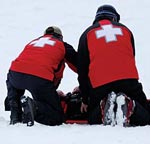
ACCORDING to the American Heart Association, more than one in three American adults have one or more types of cardiovascular disease. The National Heart, Lung, and Blood Institute’s Framingham Heart Study has followed participants since 1948 and their offspring since 1971. The study estimates the overall lifetime risk of cardiovascular disease (CVD) and found more than half of men and nearly 40 percent of women in the United States will develop CVD during their lifetime.
Why are heat and humidity such a threat to certain workers, such as those who work outdoors or in foundries?
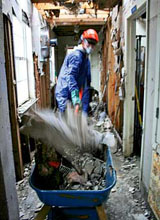
WHEN Hurricane Katrina slammed ashore in 2005, it helped drive home the fact that intense hurricanes are becoming a constant concern for residents along the Gulf Coast and Florida coastal regions. While no hurricane touched the U.S. coastline in 2006, that unusual respite is not likely to be repeated this year, according to a forecast issued by Colorado State University's forecasting team. The El Nino weather conditions that led to a quiet Atlantic hurricane season in 2006 will probably dissipate by summer, leading to above-average hurricane activity for 2007.
EACH day, hazardous chemicals and potential risk of worker exposure is becoming a more complex challenge for many environmental, health and safety professionals. Statistics show that the respiratory condition in the workplace is one of the main cause of illness cases on the job (18,865 cases in 2003; 17,679 cases in 2004; and 20,128 cases in 20051).
CAPABLE of processing more than 36,000 bits of information an hour and utilizing more than 65 percent of the pathways to the brain, the human eye contributes nearly 85 percent of an individual’s total knowledge. Yet because the eye is often minimally protected, it is particularly vulnerable to injury--especially in the workplace.
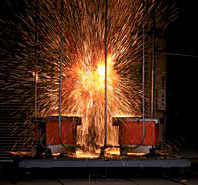
ANY petrochemical worker or electrician exposed to electric arc has something in common with a meth lab cleanup team. Shawn Arbuckle of Denver's National Jewish Medical and Research Center describes the scene: "When we work in a cleanup, we don't know exactly what we'll be exposed to, but we do know the potential is there for fire and chemical exposure."
HEAT stress is occupational quicksand. By the time you realize you or your employees have a problem, it's too late! Heat-related problems often creep up on employees who may not realize the potential danger and be able to self-protect. It is up to the supervisor (and higher management) to ensure everyone knows the hazards and the approved precautions to safeguard everyone on the job site.
OVER the years, great strides have been made in worker safety. Things have changed dramatically from the days when injuries, even deaths, were anticipated "costs" of progress and/or production. The true cost of worker injuries in terms of lost production, medical expenses, and human suffering eventually overtook the "you're lucky to have a job" mentality that pervaded the earlier part of the industrial age.
AMID concern for profit and production, employee health is often overlooked in the occupational setting. One method of maintaining worker health is through the implementation of work site medical surveillance, which is the endeavor to ensure continued medical fitness of a worker through periodic examination and diagnostic processes. Several recent accounts of negligence in medical surveillance are offered.
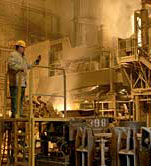
WHEN used independently of each other, the words industrial and hygiene could be construed as polar opposites. Industrial conjures up pictures of manufacturing plants, steel mills, production lines, and generally rough environments. Hygiene, on the other hand, is defined as a science of the establishment and maintenance of health.
TWO minutes has passed since we had changed radio frequencies, and I still hadn't heard from my wingmen. My flight lead still had not checked me in. Was there a problem I didn't know about?
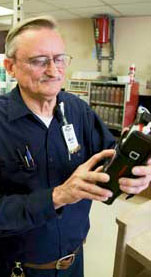
ACCORDING to the National Human Activity Pattern Survey (NHAPS) as referenced by EPA, Americans spend about 90 percent or more of their time indoors. For this reason, the quality of our indoor air should be of great concern, whether it is in a home, a workplace, or a school, hospital, or medical facility--virtually any indoor environment. Poor indoor air quality can lead to a variety of health problems for any building occupant, especially at-risk populations (those younger than 2 or more than 70 years of age, immune system-compromised individuals, asthmatics, or those with severe allergies).
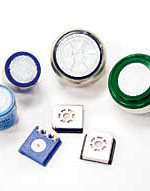
ADVANCEMENTS in safety gas detection sensor technology in the past few years have allowed dramatic reductions in the size and cost of personal multi-gas monitors, making it possible for employers to protect more workers against exposure to gas hazards in the workplace.
DO you want to propel your leadership ability to a higher level? In one of his last articles before passing away in 2005, management guru Peter Drucker wrote that leaders spent too much of their time trying to find the right answers when they should instead be focusing on formulating the right questions.