SAFETY has never been a 9 to 5 proposition. So it's good to see organizations increasingly realize that workers can't switch on safe judgment and actions upon clocking in. But, for the longest time, safety emphasis has almost exclusively been at the work site, exemplified by policies and procedures, observation/monitoring, and ergonomic emphasis on design/redesign/purchase of specific tools.
ONE doesn't need an MBA to recognize that getting high productivity from company assets is a fundamental element to managing a successful business. Any asset that is not maintained and improved eventually will stop producing.
AS facility and safety managers have recognized the need for a range of safety solutions across many applications, much has been written about meeting American National Standard Institute (ANSI) requirements and the importance of routine emergency testing. The ANSI standards are mostly black and white, but there are other issues surrounding emergency equipment that are more like fuzzy shades of gray.
SUMMER is traditionally a carefree time for teen-agers, but it is a time to work for as many as 4 million teens ages 15 to 17, according to NIOSH. Accordingly, agencies and organizations ramp up their efforts each year to inform the public of certain occupational dangers; one example is OSHA's 2007 Teen Summer Job Safety Campaign.
THE National Fire Protection Association’s Technical Committee on Fire Service Occupational Safety and Health is significantly revising NFPA 1584 according to a timetable that would produce a new standard for firefighters’ rehabilitation in 2008.
MOST employers think of the services of an Employee Assistance Program (EAP) as a health benefit, focusing particularly on the free sessions available to an employee prior to using behavioral health insurance benefits.
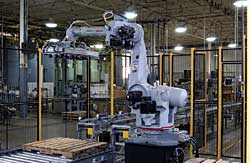
DAN Schodowski faced a challenge. As president and CEO of Solon, Ohiobased JTM Products, Inc., Schodowski knew the company was ready to grow, and making the right investment choices would be critical. Should the company buy an existing facility or build a new one? What new material handling equipment would be needed to support its growth?
DO you remember the days of the typewriter? Correction tape, carbon paper . . . the days when editing usually meant re-composing your thoughts once again from scratch. The word processing capabilities of the modern computer changed all of that forever, and for the better! However, the ease of today's "copy and paste" functions can sometimes make it too easy to duplicate past directions without visiting appropriate changes.
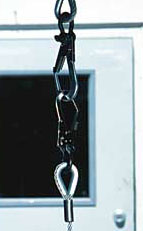
YOU buy and use fall protection harnesses, lanyards, rope grabs, lifelines, retractables, and other equipment every day. Each item is labeled, ensuring that it conforms to ANSI specifications and OSHA regulations. These product certifications give you confidence and peace of mind.

JUST before Christmas, I went to purchase supplies at a "big box" retailer. As I turned a corner to enter a wide aisle, I saw a narrow forklift coming toward me. It was moving too fast for a retail store. The driver was traveling with forks trailing but looking behind him. He was laughing. I heard no alarm. When the forklift was 20 feet away, the driver was still unaware of my existence. He continued to drive. I screamed. He turned his head.

I read the preceding statement while performing a simulated OSHA inspection. Most fall-related injuries result from the lack of fall protection. Additional injuries occur from improper use of fall protection—utilizing a body belt instead of a full body harness, improper use of lanyards, or utilizing an inadequate anchorage point.
Office Depot recently conducted a survey that found 71 percent of businesses do not have a disaster plan in place. Federal data indicate more than 40 percent of businesses never reopen after a disaster affects them, according to the company. Because 80 percent of its customer base is small to medium-sized businesses, Office Depot considers it important to help them protect their businesses, said Tom Serio, Director of Global Business Continuity Management for the company, which has 52,000 associates and about 1,500 stores worldwide.
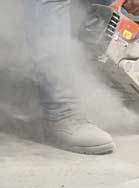
You may not realize that a worker's shoes make him or her more productive, but Tom Votel makes a good case below for the proposition. And if good footwear and inserts can boost productivity, it stands to reason that poor footwear can harm it. Votel, President and CEO of Ergodyne discussed footwear's role in worker productivity during an April 13, 2007, conversation with Occupational Health & Safety's editor. Excerpts from the conversation follow.
OSHA has long required employers to evaluate the workplace for electrical hazards. Most employers are familiar with possible shock hazards, but in recent years, and with the publication of the 2004 edition of NFPA 70E, electrical arc flash hazards are now being assessed and quantified.
WANT to break through vexing problems? By understanding underlying methods of turnaround change in one area, you can apply these strategies to other longstanding challenges.
INTEGRITY First. It’s core value #1 of the U.S. Air Force—embraced by our leadership, taught in our training programs, and a symbol of the commitment and character of the men and women serving our country.
I learned a valuable lesson about the true meaning of integrity only after serving several years in the Air Force. It wasn’t on a combat mission flying an F-16.
MY first exposure to alarm warning situations was watching the robot on “Lost in Space” alert space travelers to immediate danger. The message is the same today: Stop what you are doing, immediately react to the tone and sound, and act accordingly (avoid the hazardous situation by responding correctly). Do your employees know the sounds of safety at your workplace?