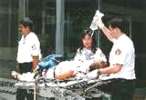
The U.S. Fire Administration and the International Association of Emergency Medical Services Chiefs have both issued detailed guidance for EMS and other responders to use during the flu.
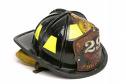
The International Association of Fire Chiefs' Safety, Health and Survival Section convened an expert panel that questions the methodology behind a report examining laws in 24 states that have a cancer presumption benefit for firefighters.

DHS Secretary Janet Napolitano and other federal officials Tuesday said they're confident federal and state agencies have a sufficient antiviral stockpile to meet the U.S. demand. Early today, CDC confirmed a 23-month-old child in Texas has died.

Analyzing 1,285 deaths in 1992-2007 of workers who died while performing tree care or maintenance, NIOSH found 38 percent were self-employed. While 34 percent died from falls, another 14 percent were electrocuted.
The groups have scheduled five live Webcasts throughout the day--10 a.m. to 6 p.m.--on May 6, which is Occupational Safety and Health Professional day.
"No matter how attractive they may appear, active and abandoned mines are not playgrounds. If you're not trained or authorized to enter the property, stay away," said Michael A. Davis, MSHA's deputy assistant secretary of labor for operations.
The day will be marked in Washington, D.C., and on six continents with candlelight vigils, conferences, and rallies calling to governments to pay more attention to occupational deaths and injuries.
Intended for a range of stakeholders, from architects to owners, Guideline 29-2009 offers a flexible approach to risk assessment for a wide range of safety and health hazards, according to ASHRAE.

Though written with avian flu in mind, the guidebook will help workplaces prepare for the swine flu already affecting several countries. The organization is making it available free.
Seminars and other events are being held all week at various locations throughout the city in support of Construction Safety Week. All sessions are free of charge and open to the public.
Inspectors identified other hazards including locked exits, obstructed exit access, and an unmarked exit; lack of welding screens and personal protective equipment for welders; untrained forklift operators; excess carbon monoxide levels from forklifts; and numerous electrical safety deficiencies including exposed live electrical parts.
Three advisory committees will meet June 29-30 to discuss the public health risk these popular medications pose. FDA said it does not plan to seek acetaminophen's removal from the market.

Taking place on 2009's Workers Memorial Day, the hearing by the U.S. Senate Subcommittee on Employment and Workplace Safety has a strong lineup of witnesses -- including Tammy Miser, shown here -- who will describe the true cost of workplace fatalities.
Author and pediatric neurosurgeon Benjamin S. Carson, Sr., M.D., of Johns Hopkins Medical Institutes will be the conference's keynote speaker. He will be joined by a cadre of other experts making presentations at the event, June 7-11.
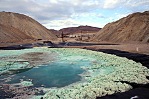
The threats on the site come from metals contaminating the groundwater and fugitive dust that could impact human health and surface water. Mining operations enhanced levels of naturally occurring uranium, making the radiological substance more pervasive and mobile in and around the site.
Under the terms of the proposed settlement, which is currently available for public comment, Puainako Town Center in Hilo, Hawaii, must close all eight large capacity cesspools owned and operated by the company by May 1, 2009.

Personnel and equipment at coal mines can be in danger if working too close to or atop piled material as it is drawn down by a feeder below onto a conveyor belt. New bulldozer operators need to know about it, and all operators should be reminded about the inherent hazards, according to MSHA.
An in-depth analysis of blood from patients recovering from the H5N1 avian influenza virus has provided important insights into how to combat the potentially lethal virus.
The Protecting America's Workers Act (HR 2067) would expand OSHA's jurisdiction to cover more employees and would allow felony prosecutions against employers who commit willful violations that result in death or serious bodily injury.

Texas Mutual Insurance Company launched it in Lubbock on a trial basis with several participating employers. "Workplace Accidents Are a Pain. Work Smart" is the theme, and a free movie ticket can be earned by taking a safety quiz.