The multi-page document provides practical advice, checklists, and other resources and tools to help identify physicians who adhere to best practices and are most likely to provide the best medical outcomes when treating workers’ compensation patients.
The agency that provides security for thousands of government buildings is understaffed and badly managed, Homeland Security Committee Chairman Joe Lieberman and others on the committee say.
Washington State can't propose 2011 workers' comp rates until the voters have passed or rejected Initiative 1082 on Nov. 2. It would let private insurance carriers write comp insurance and also would change how Washington determines premium rates.

Get Ready Day is Sept. 21, with flu preparedness a prime focus but general emergency readiness also important. The American Public Health Association's new materials include a video to test your approach.
"This employer had been renting a trench box designed to protect workers from cave-ins but returned it to cut down on costs," said Les Grove, OSHA's area director in Tampa, Fla. “Risking the safety of your workers is not an acceptable business decision."
OSHA is proposing $228,320 in penalties for 34 safety and health violations found at Art Horizons Inc. in Batesville, Miss.
The three devices, all manufactured by Boston Scientific Corp., are intended to treat patients with left bundle branch block who have either mild heart failure or heart failure with no apparent symptoms.
A solid lineup of speakers and sessions cover offshore and land operational safety lessons from Kleen Energy, BP, and more Sept. 21-23.
The violations address hazards associated with spray painting outside of a predetermined, designated spray booth, and the use of powered industrial truck fork extensions without manufacturer notification, approval and determination of lifting capacity.
The company did not obtain drug approval, increased its distribution of Levothroid rather than scaling down, and ignored a subsequent warning letter to stop the manufacture and distribution of Levothroid.
Criteria considered for the annual Secretary of the Navy award include mishap trend analysis, safety inspections, and initiatives beyond what the Navy's safety regulations require.
Dr. Daniel Horowitz, the U.S. Chemical Safety Board's director of congressional, public, and board affairs, got the promotion and unanimous approval from the board's members.
The proposed “Strengthening Pipeline Safety and Enforcement Act of 2010” would increase from $1 million to $2.5 million the maximum fine for the most serious violations involving deaths, injuries, or major environmental harm. It also would provide additional resources for the enforcement program by authorizing 40 additional inspection and enforcement personnel over four years.
"Scaffolds must be properly erected and fall protection provided to employees when they work on scaffolds at heights of 10 feet or more, yet this employer has repeatedly neglected to implement these basic, commonsense and legally required safeguards," said Anthony Ciuffo, OSHA's Long Island area director in Westbury.
The deadline is Sept. 24 for National Safety Excellence Awards being presented in February 201 in Orlando, Fla.
"Even with employees covered head to toe in dust, the company still failed to provide breathing protection and other controls," said Assistant Secretary Dr. David Michaels.
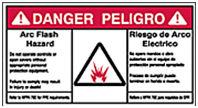
When deciding what information to include on your company labels, always remember for whom the labels are posted: the electrician or maintenance person in the field.

The forum is intended to identify possible strategies to prevent accidents and reduce the number of injuries and fatalities within this growing segment of the nation's drivers.
Three informal public meetings next month will gather information from the industry about effective safety and health management programs already in use at U.S. mines. Comments are due by Dec. 17.
Fatalities declined in all categories of vehicles including motorcycles, which saw fatalities fall by 850 from 2008, breaking an 11-year cycle of annual increases.