An educator who has studied the problem extensively says safe patient handling laws gaining ground in U.S. states require better injury and illness data for health care workers, who frequently are reluctant to report their injuries.

The proposed guidance would supersede the existing agency guidance on this subject contained in Pesticide Registration Notice 87-1 (PRN 87-1) published March 11, 1987.

The Health and Safety Executive said 455 agricultural workers have died in the past decade, and the annual death toll has remained high.
This four-hour event will cover major topics like SPCC plan basics, integrity testing, applicability, secondary containment, and recent rule revisions and will include a one-hour live question-and-answer session.
"Insufficient sleep and sleep disorders are associated with chronic diseases including diabetes, high blood pressure, stroke, and obesity. Sleep-related issues also can be primary symptoms of mental illness, such as depression," said Michael Decker of CDC's Chronic Viral Diseases Branch.
OSHA recently announced a final rule on improving the safety of longshoring employees who work with vertical tandem lifts (VTLs). The final rule will reduce hazards related to lifting two containers at a time using cranes by ensuring that safe work practices are followed. The rule was published in the December 10 Federal Register.
The new permit incorporates the Coast Guard’s mandatory ballast water management and exchange standards, and provides technology-based and water-quality-based effluent limits for other types of discharges.
The U.S. Consumer Product Safety Commission is joining Target, of Minneapolis, Minn., in announcing a new notification system for communicating product recalls in Target stores nationwide. Target's safety and recall notification program involves posting signs throughout its stores that direct guests to gift registry kiosks near the Guest Service desk to learn about recalled products.
An ALJ assessed a total civil penalty of $11,090 last April after rejecting the mine operator's claim that its foremen were rank-and-file miners with no real supervisory control.
James Purnell, Secretary of State at the Department for Work and Pensions, said he commissioned the inquiry because some 2,800 people have died from injuries in construction work in the past 25 years, and "no one can find it acceptable that this number of people have died directly as a cause of their work and we are not making sufficient progress on preventing this total of human misery."
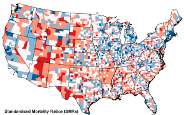
University of South Carolina geographers have produced a map of natural-hazard mortality in the United States that gives the likelihood of dying as the result of natural events such as floods, earthquakes, or extreme weather
The alliance will place special emphasis on emergency preparedness and response activities related to restoring utility services quickly and safely following a major disaster.
"These employees were just one misstep or tumble away from a fatal or disabling plunge," said Arthur Dube, OSHA's area director in Buffalo, N.Y.
The 2005 settlement and today’s penalty settlement with ExxonMobil were reached as part of a broader EPA initiative to reduce air pollution from refineries nationwide. To date, 95 refineries located in 28 states, representing more than 86 percent of the nation’s refining capacity, have been required to install new controls to significantly reduce emissions.

Nancy Nord, CPSC acting chairman, said enforcement of the new law will focus on sites "where the greatest risk of drain entrapment to children exists, such as wading pools, pools designed specifically for toddlers and young children, and in-ground spas, particularly where these types of pools and spas have flat drain grates and single main drain systems."
NIOSH has engaged The National Academies' Institute of Medicine to review the draft NIOSH Current Intelligence Bulletin: "Asbestos Fibers and other Elongated Mineral Particles: State of the Science and Roadmap for Research."
The U.S. Food and Drug Administration recently announced it will require the manufacturers of antiepileptic drugs to add to these products' prescribing information, or labeling, a warning that their use increases risk of suicidal thoughts and behaviors (suicidality). The action includes all antiepileptic drugs including those used to treat psychiatric disorders, migraine headaches, and other conditions, as well as epilepsy.
The holiday season is here and the U.S. Consumer Product Safety Commission (CPSC) is urging consumers to keep safety in mind as they decorate for the holidays. Flickering candles, blinking holiday lights, and fragrant evergreens are beautiful staples of the holiday season, but when used improperly, these holiday decorating "must haves" can pose deadly dangers.
The Centers for Disease Control and Preventions' Emergency Communication System (ECS) has redesigned its entire Emergency Preparedness and Response Web site, www.emergency.CDC.gov.
With the new technology, leaks are displayed on a video screen similar to the way night vision goggles are used to show the heat signature of objects.