Workplace safety professionals who want the ability to interact with each other more than just once a year at trade shows and conferences now have a new resource.
To help communities and businesses affected by the recent storms resume operations safely, the American Society of Safety Engineers is offering the following business resumption safety tips.
The Department of Homeland Security's Federal Emergency Management Agency recently announced the release of the interim "Comprehensive Preparedness Guide 101: Producing Emergency Plans: A Guide for All-Hazard Operations Planning for State, Territorial, Local, and Tribal Governments."
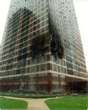
At the Sept. 17-23 International Code Council Final Action Hearing in Minneapolis, BOMA hopes to derail the required extra exit stairway for tallest buildings and an emergency responder radio coverage proposal.
"The After Action Critique: Training Through Lessons Learned" is designed to help all fire service members gather critical information from all emergencies; document lessons learned; and assist with the continuous evolution of firefighter training.

As the third anniversary of Hurricane Katrina approaches, the health care system in New Orleans and the Gulf Coast shows encouraging signs of recovery, reports a special August issue of The American Journal of the Medical Sciences.
By 2013, 75 percent of all jurisdictions should be able to demonstrate response-level emergency communications within three hours of a significant event, it states.

"Yesterday's earthquake was a wake-up call--a reminder to us to make the important changes we need to survive the inevitable," said the U.S. Geological Survey's Dr. Lucy Jones, on Wednesday.
While there have been no reports of major damage or injuries in Los Angeles, San Diego, or Tijuana, some buildings in downtown Los Angeles reportedly swayed for several seconds, prompting some precautionary evacuations.
The Sept. 16 event in Washington, D.C., will focus on how communications furthers response by health care, responders, government, and industry.
An amicus brief filed in the case last year by the American Hospital Association and other heath care organizations urged that hospitals "be allowed the full freedom afforded by HCQIA to protect patients and to improve the quality of care," and that the judgment of the lower court be reversed.

Under this grant program, CDC expects to award up to $30 million over the next three years to help people whose health was, or may have been, adversely impacted by the World Trade Center attack.
H.R. 3403, the New and Emerging Technologies 911 Improvement Act of 2008, will speed the national 911 system's transition to IP-based technology.
The Center for Health Equality at Drexel University's School of Public Health and the Office of Minority Health at the U.S. Department of Health and Human Services have launched an online resource for advancing emergency preparedness in culturally diverse communities.
If influenza pandemic hits the United States, acute care hospitals are likely to be overwhelmed. Nursing homes may then be expected to assist with the patient overflow, but a new study in the Journal of the American Medical Association suggests that many are not prepared for such a task.
"Our big take-home message is, wear self-contained breathing apparatus during all phases of firefighting," said co-author Suzanne Snedeker. "Put on the gear before arriving at a fire and don't take it off until the operation or inspection is completed, even during fire inspections conducted days later when chemicals can still outgas from charred remains."
As Midwest floodwaters recede and cleanup efforts get underway, the Association for Professionals in Infection Control and Epidemiology Inc. is offering advice to help reduce the risk of infection.
The July 29 event in Denver will survey accomplishments under the National Occupational Research Agenda (NORA), which entered its second decade in 2006.
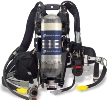
About 4,200 units of the Sperian Warrior SCBA, shown here, will be shipped to fire departments in the Los Angeles County area in the next 10 months, the company announced today.
Six years after then-Secretary Tom Ridge outlined the Homeland Security Advisory System, new AHA comments say the latest iteration for health care doesn't fit how hospitals respond to disasters.