
Are we seeing the new face of OSHA? David Michaels said the agency is doing what it can to administratively raise the dollar amounts of its penalties and adopting a new structure for penalty reductions based on the company's employee count.

A May 5 signing ceremony at DOL headquarters in Washington, D.C. is well timed because OSHA will require certification of some lifting personnel in the cranes and derricks standard it is expected to issue in July 2010.
OSHA's pending cranes and derricks in construction rule was submitted for OMB review on April 9, which means the July 2010 date for publishing the final rule could be met.
To date, EPA has certified 184 training providers who have conducted more than 4,900 courses. Based on current estimates, the agency expects more than 125,000 contractors to be certified by the deadline, with many more seeking and obtaining the training afterward.
Enhancing the week's impact, the event is being held in conjunction with Workers Memorial Day, April 28, which traditionally serves as a nationwide day of remembrance to recognize U.S. workers who die and become disabled each year on the job.

The Health and Safety Executive said it prosecuted Regentford Ltd after one of its employees died in a March 2005 fall from scaffolding. That scaffolding was gone when investigators arrived, but the documentary footage showed it, and Regentford was fined $384,000 on April 6.
The agency's April 2010 e-newsletter zeroes in on fall protection, showing examples of violations found in some of its recent inspections. This year's Safety Break for Oregon is set for May 12.
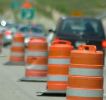
ASSE’s "Road Construction Work Zone Safety Fact Sheet" provides work zone safety tips and standards for motorists and workers.
The Department of Labor recently announced that Secretary of Labor Hilda L. Solis will convene a National Action Summit for Latino Worker Health and Safety on April 14 and 15 in Houston. Opening day events will include a keynote address by Solis and employees sharing their workplace experiences.
"First, it's easy to understand how valuable and vulnerable our eyes are, so it's an easy platform for starting a persuasive safety conversation," said David Iannelli, senior product manager for Uvex.
The free, one-hour event will focus in part on the new A10.47 standard, which covers flagger safety, run over/back over prevention, equipment operator safety, illumination, PPE, and more.
The four-axis design of the ULTRA™ Drilling System allows it to walk in eight directions; the company, Global Energy Services, said it enables natural gas drillers to raise the rig faster and more safely, without using cranes.
Oregon high school students submitted nearly 50 videos in the second annual contest. Winners will be screened at a Salem theater April 10.
The Advisory Committee on Construction Safety and Health (ACCSH) advises OSHA chief David Michaels, Ph.D., M.P.H., on worker safety and health in the construction industry.
Thirty-seven percent of respondents are optimistic about health care being a hot market this year, but 40 percent are in the "wait and see mode," and 23 percent are not touching it.
EPA said that by issuing complaints it is sending a message to construction site operators, public or private, that these regulations must be met.
Priorities will include developing courses for small businesses and employees who speak no or limited English regarding construction safety and health hazards.

The country's Ministry of Manpower promised on Monday to focus enforcement inspections on construction and maritime, where 63 percent of the 2009 fatalities occurred.

The requirements under the rule apply to maintenance, renovation, or repair activities where six square feet (about the size of a poster) or more of a painted surface is disturbed inside, or where 20 square feet or more of painted surface (about the size of a door) is disturbed on the exterior.
Two days after the event, a “We Can Help” safety and worker rights fair will take place, also in Houston, providing free information, resources, training, and services.