The event comes as fuel surpasses labor as some motor carriers' largest expense and the trucking industry deals with the highest prolonged fuel prices in history.
The campaign is part of OSHA's Young Worker Initiative, which provides information and resources to teenagers, parents, educators, and employers to ensure safe and rewarding work experiences for these summer employees.

Up to two years of crew training and equipment testing would follow conditional acceptance, which could occur by April 30.
The council has not recommended auto-injectors for use by health care personnel, at whom the guideline is directed.
The retail giant had claimed that the man would pose a safety risk to himself or customers if he worked at the store using a wheelchair or crutches.
This class numbered 13, but 917 students from 330 companies are now registered to take classes in the program, which is offered statewide.
The program would make available funding for campus security response and violence prevention training programs, projects to enhance emergency communications and planning, and execution of campus-wide training exercises.
"Our Alliance will continue to work together to provide AFS members and metalcasting businesses with free guidance and training resources to protect the well-being of employees in the foundry industry," said OSHA chief Edwin G. Foulke, Jr.
For the better part of 30 years, I have been involved in a variety of nuclearrelated projects. This is what I know: For the most part, if you give the craft accurate drawings, the tools they need to perform their work, and clear direction, they will perform for you every time. If your staff has a well-defined scope, open communication, and management support, they will perform, as well. If you are doing all of these things and still find project success elusive, what’s missing? I have found that management credibility in regard to safety is the key.
A new report given to the U.S. Department of Labor on Monday says the situation is improving. DOL is ILO's funding partner in a project that is active in 24 countries.

Medications formulated for adults but administered to children must be more carefully dispensed and monitored, the alert says.
Special emphasis will be placed on awareness and monitoring of the safety needs of non-English speaking employees.
"The key to preventing hearing loss is in knowing how to identify, address, and minimize workplace noise hazards, be that workplace a factory, construction site, or other venue," said Mary Hoye, OSHA's area director in Springfield.
The document lists good practices that can prevent excessive exposure to lead and noise by officers using indoor firing ranges and by employees of the ranges who clean up.
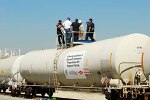
A classroom and training center on rails will travel to 10 communities along the Mississippi River corridor in the next month to provide training to emergency responders.

The facility faces $255,800 in proposed penalties for failing to train employees who may work with formaldehyde and failing to conduct airborne exposure evaluations, among other things.
A U.S. under secretary of energy co-chaired a meeting in New Delhi on Friday that concluded a week of discussions on expanding cooperation in research and clean energy production.
"The technology should be developed in a way that minimizes potential risks to human health and helps preserve the potential market for the technology," said Jack N. Gerard, president and CEO of the American Chemistry Council.
The U.S. Department of Labor is giving a $250,000 Regional Innovation Grant to help Texas' Upper Rio Grande region address the impact of manufacturing industry layoffs.

It was interesting and horrifying to watch at the same time: a dedicated worker who, at first glance, was cleaning his work PPE. On closer examination, he had a large bucket of tepid water with a wide range of gloves being dunked and hung up to dry. These gloves had handled raw sewage and were moldy from improper storage after chemicals use or animal blood.