In recognition of Fire Prevention Week, Cintas has issued a list of fire protection and safety tips to help businesses prevent fires and be prepared in the event of a fire.
The American Society of Safety Engineers' Ergonomics Branch is providing tips to help reduce MSDs at work and at home as part of October's National Ergonomics Month.
A new webpage aimed at those whose workplaces are the cars, vans, and trucks that deliver the goods and services on which the nation's economy depends, and their employers, is intended to offer best practices and policies on achieving safe workplaces in motor vehicles.
Sixteen companies win top honors in the magazine's second annual contest, with trophies and ribbons handed out Tuesday at the National Safety Council Congress & Expo in San Diego.
Throughout October, National Breast Cancer Awareness Month, experts from Fred Hutchinson Cancer Research Center and its clinical care partner, the Seattle Cancer Care Alliance, are offering a series of weekly research-based tip sheets regarding a variety of topics related to breast cancer, including breast cancer prevention, screening and early detection, treatment, and survivorship.
As winter weather approaches, homeowners may prepare by dusting off the snow blower--and its safety manual. Clearing the driveway with a snow blower doesn't have to be a dangerous task. But, unclog a snow blower with your hand, instead of the chute-cleaning tool, and you risk broken bones or amputation.
First and foremost, the hazard itself should be the most prominent consideration when choosing a specific piece of emergency equipment.
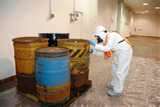
Safety professionals have long had concerns with MSDSs, beginning with issues about the ability of workers to understand them.
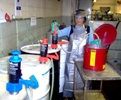
Dispensing solvents from large containers into smaller ones or spending more to buy solvents in smaller containers weren't appealing. This pharmaceutical company found a different solution for meeting the fire codes.
A mid-2010 meeting showed how GHS implementation is advancing around the world.
The new requirements will be a compliance burden for many businesses. Automated distribution is the "Easy Button" for HazCom compliance.

They're the Drilling Safety Rule and the Workplace Safety Rule. The latter applies to all offshore oil and gas operations in federal waters and will require each operator to develop and follow a 13-point Safety and Environmental Management System.
The agency and the National Science Foundation Center for High-rate Nanomanufacturing, a collaboration of the University of Massachusetts Lowell, Northeastern University, and the University of New Hampshire, will study occupational health and safety concerns related to the nanotechnology industry.
OSHA is proposing $228,320 in penalties for 34 safety and health violations found at Art Horizons Inc. in Batesville, Miss.
The Food and Drug Administration has approved the pediatric use of Protopam Chloride (pralidoxime chloride), a drug used to treat poisoning by organophosphate pesticides and chemicals (e.g., nerve agents). The drug is approved to be administered either by intravenous (IV) or intramuscular (IM) injections.
OSHA recently awarded $8 million in Susan Harwood Capacity Building Grants to 45 organizations, including nonprofit and community/faith-based groups, employer associations, labor unions, joint labor/management associations, and colleges and universities. The grants will assist these organizations in providing safety and health training, and educational programs for workers and employers.
September is Sickle Cell Awareness Month. This year marks the 100th anniversary of the seminal case report published in the Archives of Internal Medicine (November 1910) by James B. Herrick titled "Peculiar Elongated and Sickle-Shaped Red Blood Corpuscles in a Case of Severe Anemia."
The Food and Drug Administration recently issued warning letters to five electronic cigarette distributors for various violations of the Federal Food, Drug, and Cosmetic Act including unsubstantiated claims and poor manufacturing practices.
The Department of Labor's Mine Safety and Health Administration recently announced the publication of comprehensive data regarding safety and health records of the nation's mines. The data sets contain all of the agency's public data from calendar year 2000 to the present regarding mine locations, accidents, injuries, production, violations, and inspections.
The Food and Drug Administration is requiring that gadolinium-based contrast agents (GBCAs) carry new warnings on their labels about the risk of a rare and potentially fatal condition known as nephrogenic systemic fibrosis (NSF), if the drug is administered to certain patients with kidney disease.