In addition to paying a $13,166 penalty, the company agreed to provide more than $8,800 for training and equipment to the City of Hoquiam (Wash.) Fire Department to improve the department's capabilities in responding to hazardous materials emergencies.

The National Transportation Safety Board found the 2008 rail collision in Chatsworth, Calif., was caused by the Metrolink engineer's prohibited use of a wireless device while he was operating the train. The engineer, who died in the crash, did not respond appropriately to a red signal at Control Point Topanga because he was engaged in text messaging at the time.
"It's been 99 years since the fire at The Triangle Shirtwaist Co. in New York City took the lives of nearly 150 workers. . . . Blocked fire exits can be deadly. It is that simple," said OSHA chief Dr. David Michaels.
Currently, USCG members must walk -- carrying all of their equipment -- to any ice rescue scenes, which can take valuable time in rescue efforts. With the airboat, which goes over ice and water, rescuers will be able to reach more incidents and get there faster.
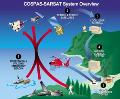
With 49, the state was ahead of Florida in rescues assisted by NOAA’s search-and-rescue satellites and Russia’s Cospas spacecraft. In all, the system helped to rescue 195 people last year in the United States and surrounding waters.

Jan. 31 is the deadline for the Medtronic Foundation's $1,000 grants to schools' staffers to help fund CPR and AED training. The foundation funds the American Heart Association's Be the Beat campaign to educate teens about sudden cardiac arrest.
The company offers in vitro diagnostic kits, and analyte-specific, general purpose, and research-use-only reagents for nucleic acid analysis. EPA said the company failed to obtain a hazardous waste storage license, among other things.
FocusDriven is a nonprofit organization created by the National Safety Council and supported by both DOT and Vernon F. Betkey Jr., chairman of the Governors Highway Safety Association.

The International Association of Fire Chiefs is creating Go Teams -- two-person teams of skilled chief officers -- in each of the 10 national FEMA regions to support mutual aid. Those application are due Thursday. Friday is the deadline for 2009 SAFER grants from DHS.

For aviation, unless the cells or batteries are transported in a container approved by the FAA administrator, they would have to be stowed in crew-accessible cargo locations or locations equipped with an FAA-approved fire suppression system.
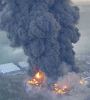
The Department of Homeland Security has not agreed to exempt them, and it published a new request for comments today about the models it is using for vapor cloud explosions and pool fires. The industry asked to be exempted.
Have a family communications plan in place. Designate someone out of the area as a central contact, and make certain that all family members know whom to contact if they become separated. Most important, practice your emergency plan in advance.
The videos also explain how workers can perform a user seal check to test whether a respirator is worn properly and will provide the expected level of protection.
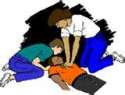
Writing in the latest issue of Circulation, authors from Public Health Seattle–King County’s Emergency Medical Services Division and the University of Washington Department of Medicine report the frequency of serious injury related to dispatcher-assisted bystander CPR among non-arrest patients was low.
On Tuesday, HHS and CDC will host a webinar with the American Diabetes Association, the American Lung Association, and the American Cancer Society. Other activities are planned all week, focusing on the importance of continuing the tide of flu vaccinations.
Boeing's second Dreamliner completed its first flight on Dec. 22 from Everett, Wash., to Seattle. The first production aircraft will be delivered next year to Japan's All Nippon Airways.
Presenter Rand Beers, under secretary for the National Protection and Programs Directorate, will discuss the infrastructure protection mission and “The Next Frontier in Homeland Security.”
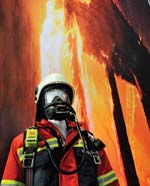
This article focuses on the issue of lone worker safety in the industrial workplace in industries both large and small. The first point of order is to define just what is meant by a "lone worker."
"Maintaining EMS certification has real costs -- I am honored to have this opportunity to help lighten the financial burden of EMS professionals who are out of work," said Greg Friese, a paramedic and president of Emergency Preparedness Systems, one of three companies behind the initiative.

The H1N1 pandemic was 2009's biggest safety and health story, but OSHA also grabbed the spotlight last year with a blockbuster $87 million fine. For all of the attention paid to tower crane safety, combustible dusts, crumbling infrastructure, and a jobless recovery, the biggest story of 2000-2009 was Sept. 11, 2001.