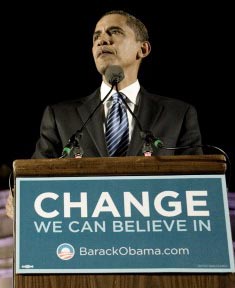
Regarding worker safety and health, there's not a lot of voting history to speak of with Sen. Barack Obama, which is understandable since he is still in his first term as a U.S senator. Thus far, his chief connection to workplace safety and health has to do with his support for and from labor unions, which have a long history of effective advocacy for workers' safety and well-being on the job. The law that created OSHA and NIOSH was signed during a Republican administration, but Democratic presidents have tended to do more in terms of enacting new safety and health regulations. (It's fair to say many safety professionals seem to agree that old regulations should be updated without undue delay but don't desire new regs.)

Experience vs. youth is one way to view the contest between John McCain and Barack Obama, and how they differ becomes clear when weighing these two presidential contenders' views and potential impact on workplace safety and health. Very few votes or sponsored bills exist to tell us where Obama stands on safety, health, and environmental issues, but this is not true of McCain, who was first elected to the Senate in 1986.

Experience vs. youth is one way to view the contest between John McCain and Barack Obama, and how they differ becomes clear when weighing these two presidential contenders' views and potential impact on workplace safety and health. Both have drifted closer to centrist stances in the final days of the race. Very few votes or sponsored bills exist to tell us where Obama stands on safety, health, and environmental issues, but this is not true of McCain, who was first elected to the Senate in 1986. His label as a "maverick" Republican is accurate.
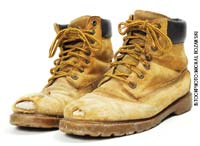
That’s a clever use of duct tape, I thought, but it’s not reasonable for work boots. The employee wore a pair of dry, rotted-leather safety shoes that were being held together with duct tape, and he was trying to make it to payday. I’ve seen other employees who have purchased used safety shoes that had been worn down, causing uneven foot surfaces or treads that could potentially cause a fall. I’ve also seen the super-discount safety shoes, which are hard to walk in and extremely heavy.
Fluids are essential to most manufacturing processes. They arrive in containers, drums, totes, bulk shipments, and pipelines. When all is going well, they seem to be the lifeblood of the facility. When they leak or spill, however, the mess they create can range anywhere from being a nuisance to being a health and environmental liability.
The key to high-speed industrial door safety is understanding what you need and when you need it.
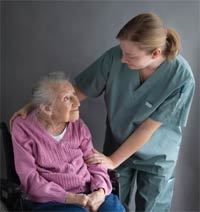
It has long been recognized that back injuries account for a disproportionate share of worker’s compensation dollars paid in permanent disability, in questionable worker’s compensation claims, and in litigated cases. OSHA has not developed specific standards, in large part because individual susceptibility factors (age, physical health, pre-existing conditions, etc.) makes a one-size-fits-all standard impossible.
Veolia Water North America, the nation’s largest services provider for municipal and industrial water and wastewater systems and facilities, takes safety very seriously. Our company understands not only the impact safety has on our bottom line, but also its impact on our employees’ morale and ability to go home to their families the way they left them. From 2000 to 2005, the organization saw its safety performance level off with little or no improvement, year over year.
It's not enough to assume a fresh workforce, even if eager, will magically divine the safest ways to do new jobs.
How can you make a first step solid? Ergonomically, starting up a new site is the best time to institute new design interventions. Put the desired tools and workstation setups into place up front, rather than playing catch-up later. Similarly, this is true for setting desired behaviors.
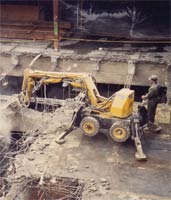
Best practices keep demolition's dangers to a minimum.
Although the prevailing perception is that the demolition industry by its very nature is a dangerous business, the truth is that the industry’s continued commitment to safety education and best practices is creating a relatively safe industry in which to work.
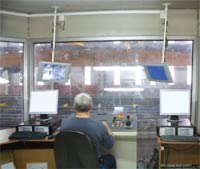
The objective of any ergonomics program is to ensure that work areas and/or jobs that produce musculoskeletal injuries are identified, evaluated, and made more “worker friendly.” The procedures for selecting work areas and/or jobs for review are not new; however, they are precise and do produce results—fewer injuries, fewer employee complaints, and productivity improvements.
Currently, much thought and discussion are being given to leading indicators in the world of safety. Everyone is drawn to the promise of getting ahead or seeing the potential for injury before it is realized. Only recently has technology evolved to the point where we can start to review leading indicators in real time, providing safety professionals with a new perspective and suite of tools from which to work. This article will provide some common working definitions and then explain how you can begin to use two leading indicators—at no cost—that may help you achieve your injury reduction goals.
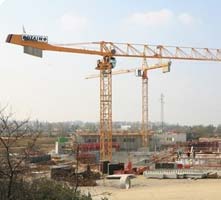
An average of 22 construction workers died in crane-related incidents per year from 1992 to 2006, according to a report released June 17 by the Center for Construction Research and Training (CPWR), which derived the number from BLS data. The "Crane-Related Deaths in Construction and Recommendations for Their Prevention" report, spurred by tower crane collapses in New York City and Miami that killed 10 workers and one bystander this spring, listed eight recommendations. Certification of operators, inspectors, riggers, and signalpersons are the top three.
Arc flashes occur when electrical current jumps the gap between two or more energized conductors. Depending upon the amount of current, arc temperatures can exceed 35,000 degrees F. That’s why electrical workers must wear fire-resistant (FR) personal protective equipment when working near exposed, energized equipment.
Weather tools available to emergency responders have improved considerably in recent years. As important as National Weather Service (NWS) watches and warnings are, they’re just the starting point. You can now access everything from detection of likely tornadoes to real-time lightning and frost and icing forecasts.
NFPA 70E, Standard for Electrical Safety in the Workplace, has become a critical part of the safety equation for companies and individuals who work on or near electrical power systems and their components.