The two-day symposium takes place this week in Scottsdale and will be keynoted by T. Shane Bush's presentation, "Right Brain Leadership for the Future of Construction Safety."
According to a new survey released today by Kimberly-Clark Professional, 89 percent of safety professionals polled at the 2008 National Safety Council (NSC) Congress have observed workers failing to wear personal protective equipment (PPE) when they should have been.
3M recently started a giveaway promotion to coincide with the launch of its new Lexa™ MinimIzeR™ safety glasses. The eyewear is designed for welders, helpers, and other personnel around the immediate welding site, such as supervisors or engineers, to minimize their chances of accidental exposure to "flash burn."
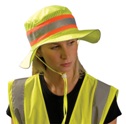
A full wardrobe of stylish gear is ready for the Nov. 24 effective date of the FHWA rule requiring high-visibility apparel (such as this OccuNomix International, LLC outfit) for those working in highway work zones, including emergency responders.
The agency has determined that, for both substances, use without impervious gloves or a NIOSH-approved respirator with an APF of at least 10 may cause serious health effects.
The association's 25th annual conference will take place in August at the same San Antonio convention center where ASSE's PDC will be held June 28-July 1, 2009.

The 22nd Expoprotection trade show in Paris includes the "Ergonomics Village" with 70 exhibitors. About 24,000 attendees are expected at the show.
Electronic tools helping small businesses evaluate workplace safety and health management programs was among the topics presented at a recent OSHA forum titled "Challenges Small Businesses Face in Complying with Regulations."
The construction company's activities at sites around the world continue through Sunday and remind the workers that active planning should precede every task.
The academy's recommendations include both operative and non-operative treatment options as well as alternative techniques.

PAPR. No, it has nothing to do with the clapper (Clap On, Clap Off), but it does have something to do with helping some of your employees breathe easier. A PAPR (pronounced PAP-er), or Powered Air Purifying Respirator, is a respirator of convenience for those employees who may be problematic into fitting in a regular respirator facepiece or for those jobs where you need cool air or where you need to have a high assigned protection factor (APF; more on that later).
Whether or not it’s true that some forward-looking caveman started it all by strapping a turtle shell to his head, it’s certain head protection has been a matter of survival throughout human history.
Featuring updated permeation and degradation data, the comprehensive document is designed to allow users to accurately search for the right protective glove specifically for chemical applications.
CEO William Lambert announced "the strongest third quarter in MSA history," calling it "especially satisfying in the current economic environment." Net sales rose by 15 percent, and net income increased 7 percent.
Exposure may occur when a worker handles drug vials; compounds, administers, or disposes of hazardous drugs; cleans spills; or touches contaminated surfaces.
The institute's researchers, along with industry and academia, have developed a training package to educate the mining community about some possible interventions beyond kneepads that may be used to help decrease knee injury rates.
"Left uncorrected, these conditions expose employees to the ongoing threats of electrocution, lacerations, amputations, fires, falls, chemical burns, hearing loss, and crushing hazards," said C. William Freeman III, OSHA's area director in Hartford, Conn.
Free to job seekers via www.safetyequipment.org, the Safety Equipment Industry JobBase will match qualified professionals with prospective employers.

The S12.6 standard for measuring hearing protectors' real-ear attenuation will be "heavily referenced" in EPA's rule changing protector NRR labels, which is expected to be issued soon.
This event at the Sheraton Station Square in Pittsburgh, Pa., looks at prevention of major injury categories, such as construction falls and health workers' needlesticks, and Hispanic worker injuries.