The serious violations address fall hazards at heights ranging from 12 to 40 feet, including a lack of guard rails, hand rails, harnesses, and/or belts/lanyards.
For instance, IH consultants will be happy to know about the results of SKC Inc. research showing alternative air sampling bags work well.
OSHA has cited Multi-Cast Corp. for 13 safety and health violations, including failing to ensure foundry employees wore fire-retardant clothing and protective equipment while working with molten metal.
The inspection was initiated after an employee sustained a partial amputation of two fingers and a broken wrist in November 2010.
"This company was aware that employees were conducting torch cutting on a steel structure coated with lead-based paint and failed to ensure that a respiratory protection plan was in use on the job site," said Michael Connors, OSHA's regional director in Chicago.
At the work site, welding equipment ignited flammable gases and caused a flash fire resulting in second and third degree burns to the face and head of the welder working inside the steel pipeline.
“W503 Noise - Measurement and its Effects” will provide registrants with a better appreciation of the nature of noise hazards in the workplace and the effects of noise on people, noted AIHA.
OSHA has cited PolyChem Services Inc. for one safety and five health violations after a worker received second- and third-degree burns at the plant in November 2010.
OSHA's inspection of the beef processing and packaging company was initiated in November 2010 under the agency's Site-Specific Targeting Program, through which OSHA focuses on employers with higher-than-average occupational injury and illness rates.
The industry's major names are here in Portland and, from the looks of things so far, they brought their best with them.
Fall protection expert Thomas Kramer will receive the Charles V. Culbertson Outstanding Service Award from the American Society of Safety Engineers on June 12.
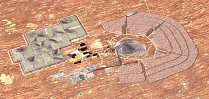
BHP Billiton on May 13 published its final Supplementary Environmental Impact Statement for a huge expansion of its Olympic Dam operation in South Australia.

The new certification label will bear the manufacturer's name and helmet model and the words "DOT FMVSS No. 218 Certified."
Heat stroke is a medical emergency that may result in death. Symptoms include confusion, loss of consciousness, seizures, very high body temperature, and hot, dry skin or profuse sweating.
The employee was stacking televisions on a storage rack while standing on an elevated powered industrial truck's platform when it suddenly tilted and caused the employee to fall approximately 12 feet.
Ten serious violations include various fall hazards, a lack of personal protective equipment, and failure to train employees on lockout/tagout procedures to prevent accidental energy start-up.

Reliability upgrades, quality and environmental improvements are planned at the 40-year-old facility, the company's largest U.S. manufacturing site. Its employees achieved their best safety record ever in 2010.
OSHA issued 16 repeat and 17 serious citations that cover such violations as allowing the air pressure to exceed more than 30 pounds per square inch for cleaning equipment and failing to unblock exit doors and routes.
Two days of live webcasts of tech sessions taking place at the Portland, Ore., conference will begin May 18.
This company has disregarded the safety of its employees and repeatedly allowed them to be exposed to struck-by hazards from structural failure, electrocution hazards and falls," said Robert Vazzi, OSHA's area director in Savannah.