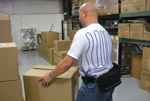
NIOSH notes in its publication "Occupational Exposure to Hot Environments," (1986) that although workers can acclimatize themselves to different levels of heat, each worker has an upper limit for heat stress beyond which that worker can become a heat casualty. Further, it has been shown that a worker's ability to focus attention and the worker's reaction times can be dramatically reduced by even a 2 percent dehydration level due to heat stress.
Since the inception of the NFPA 70E 2000 Edition 10 years ago, there has been a major evolution in our understanding of the electric arc flash hazard.

If you are responsible for the health of your gas detection program, now is a great time to get it into shape. And if you want to keep your gas detection program healthy and keep your people going home safely at the end of each day, exercise your data analysis muscles by following a routine of reviewing the information stored in your gas detectors.

The last time the nation's foremost industrial hygiene groups gathered in Denver in a large-scale way, American astronaut Neil Armstrong was still two months away from stepping down from the Apollo 11 landing craft, making "one giant leap for mankind."
The majority of employers in the United States would not argue the point that the Hazard Communication Standard (HCS) has cost their company an incredible amount of time, money, and grief since its inception. Though it is a great concept, I question whether the HCS, even after more than 20 years in existence, has produced more than a few positive results in the eyes of most employers and employees.
The type and size of a company really don't matter because a well-executed safety incentive program will serve them well, says industry veteran Sean Roark, CPIM.
It's clear that U.S. safety managers understand cash is a bad motivator of safer behaviors and performance on the job. Nine out of 10 potential customers he sees at industry trade shows accept that statement as a given, said Brian Galonek, CPIM, president of All Star Incentive Marketing of Fiskdale, Mass.
Here is the wellness gig in a nutshell. Health care costs really are out of control. How do we win this out-of-control game?

Disposable nitrile, natural latex, and vinyl gloves, often referred to as thin-mil gloves, are used in a variety of distinct applications. Understanding the truths about glove performance is important in selecting the right glove for each application.

When illnesses strike — such as seasonal flu, H1N1, or MRSA — how do you protect your workers and do your part to stop contagious infections from spreading to unsuspecting workers and crippling the productivity of your organization, with high absenteeism from sick leave or mass panic?

Today's on-site occupational health centers are the fruition of an evolution that began soon after the OSH Act was signed into law 40 years ago, when the chief task involved was treating work-related injuries. Medical surveillance was part of the package, then and now, but nonwork- related acute care and health management are now important components, said Stu Clark, executive vice president of Comprehensive Health Services Inc. (CHS), based in Reston, Va.
Are there people in your company who are working inflamed? Angry, hot around the collar, on guard, suspicious, untrusting, disbelieving, on edge, ready to react? All are potentially dangerous to their company's smooth functioning — and to their personal safety.
Cutting back on safety expenses could amount to gambling with not only the health and well-being of workers, but also with profits and perhaps the company itself.

Manufacturing a protective boot that can meet exacting national standards is challenging enough. When the relevant industry adds its own performance testing to the mix, as the aluminum smelter industry around the world has done, the challenge grows — but this happens for all the right reasons.

At approximately 10 a.m. on March 25, 2009, an F-22 crashed northeast of Edwards Air Force Base, killing David Cooley, 49, of Palmdale, Calif., a 21-year veteran test pilot. During the days of World Wars I and II, this may have been all too common an occurrence with test pilot deaths occurring weekly, but today, with advances in safety and technology, a test pilot's death happens on the average of once every two to three years.
Being prepared for an unexpected disaster requires planning well in advance in order to manage any emergency situation. Whether it is a natural, weather-related, man-made, or technological disaster, the key to survival lies in your pre-disaster efforts. Taking the time to assess the company's functions, develop plans to keep the business operating, detail strategies to lead recovery, and conduct employee training can make the difference between survival or closure for a business.