Buy-in. It is a critical element to a valued safety and health process. The problem is, no one seems to be able to agree on how best to get there from here.
The economy is bad, business is down, and companies are laying off employees in record numbers. They need to cut expenses. An easy target is the company's incentive program. It doesn't produce goods, make sales calls, clean the building, or repair equipment. It just costs money the company doesn't have. Or does it?

June 3, 2008, turned into a nightmare for Chris and Janet Augeri. Instead of celebrating their son Rob's 31st birthday, they were making plans for his funeral.

Learning how to minimize the risk of potentially dangerous or fatal fall hazards allows organizations to take a proactive approach to worker safety. In November 2007, the American National Standards Institute (ANSI) released a comprehensive family of standards, known as the Z359 standard or "Fall Protection Code," to help organizations learn how to reduce risk.
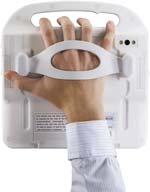
Building a mobile computer for health care involved totally sealing it and adding features such as a fingerprint reader for biometric sign-in, an integrated camera, and a built-in bar code scanner for scanning patients' wrist bands and medicines, said Greg Davidson, Senior Business Development Manager for Health Care for Panasonic Computer Solutions Company (Secaucus, N.J.). He talked about creating computers for these and other challenging environments during a Dec. 1 conversation with OH&S Editor Jerry Laws.

You're in the market for a material handling product, something that can help your employees move those loads quickly and safely. You surf the Web and flip through catalogs, but how do you start to narrow your choices? The same way best-in-class manufacturers create innovative products: research, testing, and knowledge.

Process Hazard Analysis (PHA), a regulatory requirement under OSHA's 29 CFR 1910.119(e), is a collection of methodologies to address process hazards. Societal and technological changes are affecting sources, intensity, and frequency of hazards. For instance, digital controls and smart instruments have reduced maintenance requirements inherent with analog instruments.
The future will be defined by how organizations respond to globalization, culture and performance; prioritization of safety initiatives; development of employee engagement; and the relationship between organization and employee.

Employees and managers should be trained to recognize and
prevent combustible dust fires, and facilities should have a damage
control plan that includes sprinklers, explosion protection systems,
and deflagration venting.

Almost every workplace has a fire extinguisher. Quite a few are equipped with automated external defibrillators. A few suppliers of emergency oxygen units and kits are hoping to see those products someday gain a foothold comparable to AEDs, and possibly even comparable to extinguishers.
OSHA and other federal agencies track electrical accidents of all kinds, but not arc flash incidents specifically. The Institute of Electrical and Electronic Engineers (IEEE) and the National Fire Protection Association (NFPA) are working to change that through a collaborative research project to conduct extensive testing on arc flash. At present, only data on all electrical accidents are available.
Instead of focusing on safety (i.e., the avoidance of employee injury), many safety managers are focused on compliance (i.e., the avoidance of regulatory action taken against them). To put it another way, compliance-first is a mindset that asks, "What do I need to do to stay safe in the eyes of the government?" while a safety-first mindset frames the issue more simply: "What do I need to do to stay safe?"

No two ways about it: Masonry is hard work and stressful on the body. Masonry workers have the highest rate of back injuries causing days away from work among all of the construction trades. The rate is more than one and a half times higher than the average rate for all construction workers.

One of the questions most frequently asked is, "What kind of training do I need to be a Competent Person in regard to fall protection?" Although it seems like a straightforward question, the answer can be a little tricky. Many people believe the singular requirement to achieve Competent Person status is completion of a fall protection course, but it's just not that simple.

Confined space entry presents a potential hazard in numerous industries. Whether it is an inspection of an aircraft fuel tank, entering the hold of a barge, working in an underground utility vault, or cleaning a wine fermentation tank, education and safety are important when entering confined spaces.
Software-as-a-Service (SaaS) has proven itself in the health and safety sector: it saves money, simplifies IT objectives, and ensures customers are using the most current versions of software. Yet SaaS's strategic potential for the industry has yet to be mined. It's time to take a hard look at how SaaS could evolve to best serve the health and safety sector.