Industry associations say methods used to measure asbestos under MSHA's new rule "may indicate that asbestos is present in a mine when in fact it is not."
OSHA will start an "informal public hearing" on the rule at 10 a.m. July 22 in Washington, D.C. If a second or third day is necessary, the hearing will begin at 9 a.m. those days.
The alleged violations include failing to lockout equipment prior to bin entry to prevent accidental energy start-up and allowing employees to walk on the grain to make it flow.
Rep. John Barrow, whose district includes the Imperial Sugar plant, is a sponsor of H.R. 5522, which would require interim and final dust standards and revision of the HazCom standard.

Numerous safety organizations have filed critical comments about the proposed standard, but the big construction union praised it, for the most part.
Insurance and Safety Fire Commissioner John Oxendine said the rule is intended to prevent any more incidents like the Port Wentworth Imperial Sugar explosion last month.

The page, unveiled by agency chief Edwin Foulke Jr., links to the current National Emphasis Program, a bulletin on dust hazards, and several relevant standards.
The investigation found no structural problems with the tower; rather, the tragedy was the result of a system that allowed the operator to restart the turbine after service while the blades were locked in a hazardous position, according to the agency.

Michael W. Thompson, CSP, president of the 32,000-member association, wrote Feb. 26 that the proposal "fails to recognize current safety practices that are widely understood and have proven successful."
Its comment deadline is a week away, and the ones posted so far complain it is confusing, unneeded, and burdensome.
Three contractor organizations wanted even more time. OSHA now will take comments until Feb. 28.
"Employees should never be allowed into an excavation until it is properly and effectively protected against collapse," said Brenda Gordon, OSHA's area director in Braintree, Mass.
Four classifications of spaces are proposed; comments due by Jan. 28, 2008.
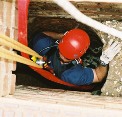
R-E-S-C-U-E. The Merriam-Webster Dictionary defines rescue as "to free from danger, harm or confinement." Confined space rescue can be a very dangerous act. Statistics show that more than 60 percent of those who die in confined spaces are people attempting to perform a rescue.
The day began like any other for an experienced contractor of 15 years. He left his house at 7 a.m. to perform storage tank maintenance at a local chemical plant. This was a very routine task, one he had performed hundreds of times. As he kissed his wife and two young children goodbye, he anticipated being done early this day and told them that he would see them for dinner. As he backed his car down the driveway, he honked the horn and waved goodbye. Sadly, this was the last time he would ever see his family.
Safety committee chairmen in both houses of Congress want answers from MSHA about the Crandall Canyon mine disaster Aug. 6, which claimed nine lives in all. MSHA has already appointed its own investigative team.
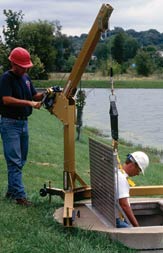
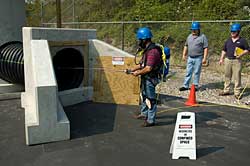
THE American Federation of State, County and Municipal Employees (AFSCME) defines a confined space as an area that has limited openings for entry and exit, has poor natural ventilation that can pose serious risks, and is not designed for continuous occupancy by workers. Workers in various industries are required to inspect, clean, test, and maintain these spaces, making it incredibly important that proper safety precautions are in place to prevent injuries from falls. Confined spaces (such as sewers, tanks, or manholes) are one of the most challenging rescue situations. Access can be difficult given small openings and a lack of space. Along with these concerns, confined spaces often present additional risks, such as the lack of oxygen or noxious air that makes immediate rescue a priority.
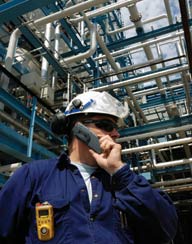
WHEN power plants, oil refineries, and food processing, pharmaceutical, chemical, paint, and plastic plants need to have major service, that work is called a plant turnaround. These times without production are both high stress and high cost, in terms of labor as well as lost production revenue. The positive side can be substantial: increased equipment reliability and a lower risk that broken equipment will cause an unscheduled outage or catastrophic accident.
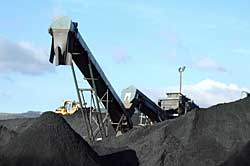
LAST year's spike in mining accidents, which began with the Sago mine explosion Jan. 2 and was followed 17 days later by two fatalities in a conveyor belt fire in the Aracoma Alma #1 mine, also in West Virginia, put a national spotlight on what Cecil E. Roberts, president of the United Mine Workers of America (UMWA), described in his speech before the Senate Committee on Health, Education, Labor and Pensions on March 2 as the Mine Safety and Health Administration's history of "inaction and chronically misdirected efforts."
DURING the majority of inspections and maintenance performed on aircraft fuel tanks, personnel must enter the interior of the tanks. This type of entry is defined as confined space entry and is regulated by the Occupational Safety and Health Administration. In these spaces, personnel can be potentially exposed to dangers such as oxygen deficiency and enrichment, explosive gases, and toxic effects from fuels and maintenance chemicals.