Mine operators are urged to follow safety checklists as low barometric pressures and low humidity, coupled with seasonal drying of many areas in underground coal mines, have contributed to the larger number of mine explosions during winter months.
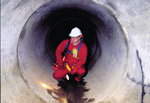
Confined space entry presents a potential hazard in numerous industries. Whether it is an inspection of an aircraft fuel tank, entering the hold of a barge, working in an underground utility vault, or cleaning a wine fermentation tank, education and safety are important when entering confined spaces.
OSHA has been conducting a Combustible Dust National Emphasis Program (NEP) since October 2007, which it says has resulted in an unusually high number of General Duty Clause violations, indicating a strong need for a standard.
The Mine Safety and Health Administration has proposed $504,900 in civil penalties against UAE Coalcorp Associates, which operates the Harmony Mine in Northumberland County, Pa. Five violations were cited from a fatal roof fall incident in June 2008 and assessed under the flagrant violation provision of MSHA's civil penalty regulation.
The 2004 death of Keith Webb, 53, during the unloading of a ship docked in the Thames River exposed Tate & Lyle PLC's failure to train employees to enter and exit ships' holds.
In April, a fire at the facility sent three workers to a local hospital. The resulting inspection revealed nine alleged willful, four serious, two repeat, and two failure-to-abate violations.
The investigation found 32 serious violations, including failing to evaluate the worksite for exposures to hydrogen sulfide, develop procedures for waste stream processing, develop decontamination procedures, and train workers on the hazards associated with confined space entry on barges.
Five minutes after the worker was instructed to exit the excavation, one of its sidewalls collapsed. Had the worker still been in the excavation, he could have been crushed or buried by the cave-in, an inspector noted.
Although there is a decline in the domestic production of meth in recent years, vigilance is warranted because of the destructive nature of the drug and the environmental hazards caused by meth labs, the agency said.
"An unprotected trench is a potential grave," said Paul Mangiafico, OSHA's area director for Middlesex and Essex counties. "Its walls can collapse suddenly and with great force, burying workers beneath tons of soil and debris before they can react or escape.”
OSHA has cited Seward Ship's Drydock Inc. for alleged willful, serious and repeat violations of safety and health standards at its ship repair facility in Seward, Alaska. The company faces a total of $87,300 in proposed fines.
Underground construction contractor A-1 Excavating Inc., headquartered in Bloomer, has agreed to pay $474,000 in penalties as part of a settlement agreement with OSHA addressing hazards cited during three inspections. The company also will take comprehensive steps to upgrade worker safety and health at its worksites.

Between the National Safety Congress and A+A, taking place amid Dusseldorf's lovely scenery, the world's PPE providers and safety professionals will have plenty to chew on before the holidays.
In addition, the company faces fines for three serious violations relating to poor egress procedures from the trench, failure to provide proper training for trench operations, and placing excavated materials too close to the edge of the trench.
Under an agreement signed last week, OSHA and LSU Continuing Education will work together to deliver workplace safety and health courses, specifically focusing on related hazard awareness and the recognition and benefits of an effective safety and health management system.
OSHA cited the company with one willful violation for failing to provide an adequate protective system for employees working in an excavation 8 to 10 feet in depth and one serious violation for failing to ensure employees were wearing high visibility vests.
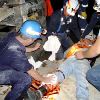
Grantees will use the funds to provide federally mandated training and retraining of miners working at surface and underground coal and metal and nonmetal mines, including miners engaged in shell dredging or employed at surface stone, sand, and gravel mining operations.
"This case clearly shows that an unprotected excavation can turn deadly in seconds, trapping and burying workers before they can react or escape," said Brenda Gordon, OSHA's area director for Boston and southeastern Massachusetts.
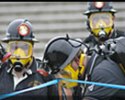
Nine Ohio mine rescue teams will be assigned the same emergency problem and will be evaluated by state and federal mine inspectors on their procedures and speed. Two courses will run simultaneously and teams will be sequestered until it is their turn to compete.
"The procedures for protecting trench workers are easy enough to implement, but what's required first is employer and employee dedication to workplace safety and health," said Greg Baxter, OSHA's regional administrator in Denver.