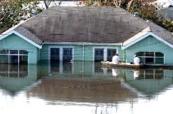
"Each year, more deaths occur due to flooding than from any other thunderstorm-related hazard. Why? The main reason is people underestimate the force and power of water," according to FLASH, a safety coalition.
The five-year agreement is for cooperation in technical areas that include operating reactors, new reactors, nuclear waste management, radioactive material safety and safeguards, physical security, nuclear safety research, and emergency preparedness and response.
A webinar will be held on March 27, 2008, at 2 p.m. ET on the newly updated CDC courses "Forensic Epidemiology 3.0" and "Public Health Emergency Law 3.0."

A new Ernst & Young report said catastrophic events now rank third, after demographic shifts.
FAA's final rule will require recorders to capture two hours of cockpit audio and the last 25 hours of data on new aircraft after March 7, 2010.

The page, unveiled by agency chief Edwin Foulke Jr., links to the current National Emphasis Program, a bulletin on dust hazards, and several relevant standards.
The United Mine Workers' president said the report underscores the necessity of enacting the S-MINER Act, but three committee Republicans disagree.
A new report says evidence from six states' recent disasters suggests the program to help with psychological trauma needs to revise rules that hampered states' efforts.
"When we spring forward this year, we want every American to make sure their family has a preparedness kit to fall back on in the event of an emergency," says APHA Executive Director Dr. Georges C. Benjamin.
The U.S. Department of Homeland Security recently announced the selection of 11 universities to serve as important partners for conducting multi-disciplinary research and creating innovative learning environments for critical homeland security missions. These universities will partner to lead one of five new Centers of Excellence and receive a multi-year grant of up to $2 million per year, over a period of four to six years.
The Yale Center for Public Health Preparedness will hold "Community Preparedness: Addressing the Needs of Diverse Populations" on April 17-18, 2008 at the Omni Hotel in New Haven, Conn.

A new report assessing states' preparedness says disease surveillance systems still need to be strengthened.
"We . . . think that it would be beneficial for people who are displaying symptoms as well as households with children, elderly persons, or occupants with chronic respiratory illnesses to receive priority consideration for alternate housing," said CDC Director Dr. Julie Gerberding.
Surprisingly, several urban schools rated higher on campus safety than many schools in suburban areas or smaller cities, emphasizing that preparedness has more to do with appropriate allocation of resources and less to do with geographical setting, the report says.
The victims include at least 24 people in Tennessee, 13 in Arkansas, seven in Kentucky, and four in Alabama. Hundreds more were injured.

Last year, the 6,000-squaremile National Capital Region around Washington, D.C., which includes the Pentagon and offices for about 340,000 federal workers, received the first seven Mobile Evacuation Buses produced by High Point, N.C.’s Sartin Services Inc. Ed Sartin, the company’s president, said emergency responders in many jurisdictions are looking for vehicles that can accommodate multiple patients.

In-place shelters moved rarely or not at all have significant advantages over portables, the agency's mine safety office concludes. Peabody Energy's Federal No. 2 mine in West Virginia is shown here.
Starting this summer, automated aircraft will carry instruments into hurricanes and check on Arctic climate change and Pacific/West Coast storms.