
Three centers of excellence funded in 2006 and 2007 are researching beneficial approaches to make the workplace safer and healthier for health care workers and other groups.

The efforts of APIC and other organizations this year are aimed at significantly reducing health care-associated infections. APIC CEO Kathy Warye, shown here, hailed a recent CDC study showing gains against MRSA among ICU patients.
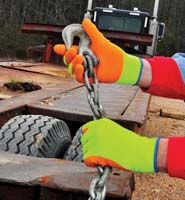
Statistics show the percentage of injuries involving lacerations is considerably higher for the construction industry than for all other industries. And yet, despite the availability of comfortable, cut-resistant gloves, it is not unusual for most construction workers to go gloveless for at least part of the work day.

Both lifelong users and those just introduced to fall protection equipment struggle with hardware compatibility. Unfortunately, there are cases where workers using equipment designed according to American National Standards Institute (ANSI) standards have been seriously injured or have died as a result of incompatible connections.
Through the agreement brought on by a shareholder resolution, the company has committed to survey its current U.S. potato suppliers and compile a list of best practices in pesticide reduction that will be recommended to the company's global suppliers (through the company's Global Potato Board).
In a field where hand washing and hygiene is of utmost importance, studies indicate compliance among health care providers is well below 50 percent, on average.

The International Glove Association's 2009 conference March 16-17 featured an update on a standards project pursued by glove manufacturers' technical experts and a report on the rising levels of imported gloves of all types.
Anyone can write a safety program, but it takes a real commitment on the behalf of everyone involved to create and implement a complete safety culture. The goal of developing a safety culture is to instill the qualities that motivate workers to strive to achieve safety excellence and can be developed only if all on staff work together. Just as a group is only as strong as its weakest member, your staff is only as safe as the least-concerned worker.
"Telemundo KVDA-TV 60 is the nation's first broadcaster of Hispanic programming to earn VPP star recognition," said OSHA's Region VI Administrator Dean W. McDaniel. "The station's outstanding efforts include zero injuries and illnesses over the past three years."
At least until results from sampling activity are known, EPA urged all persons to stay away from the site in Kansas City, Kan., with a special emphasis for parents to keep children off the property.

Issued by the European Agency for Safety and Health at Work, the 197-page report estimates 74,000 deaths per year are linked to hazardous substances encountered at work -- 10 times more people than are dying in workplace accidents.
"By complying with these 10 steps, collection site personnel will communicate to employees and employers that their collection site is following DOT procedures for ensuring collection site security," says the agency's Office of Drug & Alcohol Policy & Compliance.

Online registration closed March 23, and admission to the April 20-22 expo is fairly expensive. But this event at the Orange County Convention Center, shown here, is a must for risk managers and insurers.
"This order reaffirms both the right of employees to raise concerns regarding violations of Securities and Exchange Commission rules and the Labor Department's commitment to take the necessary steps to protect that right," said Ken Atha, OSHA's regional administrator in San Francisco.

High unemployment in the United States and a severe downturn in Britain are getting the attention of EAPA and allied organizations. Mary Guardino, shown here, founded Freedom From Fear 25 years ago; its 2009 National Anxiety and Depression Awareness Week will take place May 3–9.
The employee had repeatedly informed the company of suspected violations of federal aviation regulations, including ordering an unqualified pilot to perform a test flight while carrying passengers.
"The law's overly broad approach applies to products that that should not be evaluated using the same safety criteria as products that do pose a risk," said NAM President John Engler, adding that the act's "unrealistic compliance deadlines made it impossible for industry or the CPSC to adequately prepare before the law went into effect."
The centennial year is 2011, the 100th year theme is "Your Safety is our Business. Your Future is our Mission," and the 100 logo is shown here.
The ILO's International Occupational Safety and Health Information Centre was created in 1959 and now has centers and cooperative ventures spread around the globe. The CIS newsletter plans a special issue in June.
The agreement with one company focuses on leak detection and repair, the other with control of toluene, a hazardous volatile organic air pollutant that was used as a component of a wash-up solvent.