A study on the self-reported health of Americans ages 18 to 64 revealed that the flu is responsible for 200 million days of diminished productivity, 100 million days of bed disability, and 75 million days of work absence. Each episode of illness translates into five to six days of symptoms and between a half-day and five days of work missed.
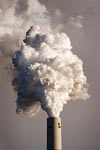
I'm fortunate to practice industrial hygiene for an employer with millions of square feet of space, the most aggressive modernization plan in decades, and a talented group of leaders, facility managers, engineers, technicians, and ES&H professionals.
The proposed change to ANSI/ASHRAE Standard 62.2-2007, Ventilation and Acceptable Indoor Air Quality in Low-Rise Residential Buildings, would require them to be installed outside each sleeping area. Comments are due by Oct. 26.
"Work-related respiratory symptoms in hospital workers may be associated with diverse biological contaminants," the researchres concluded.
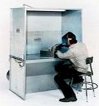
The responsibility of today's maintenance and engineering managers to maintain a clean indoor air environment has increased markedly in recent decades.

Between the National Safety Congress and A+A, taking place amid Dusseldorf's lovely scenery, the world's PPE providers and safety professionals will have plenty to chew on before the holidays.
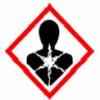
The Globally Harmonized System was developed to provide a single, consistent system to classify chemicals, labels, and safety data sheets for workers, employers, and chemical users. Under GHS, labels would include signal words, hazard and precautionary statements, and pictograms such as the one shown, used for carcinogens, respiratory sensitizers, and germ cell mutagens.
According to EPA, one the company's drivers failed to provide immediate notification to authorities following a 920-pound release of anhydrous ammonia while making a delivery to a farm.

The Oct. 6-7 and Nov. 17-18 events in Arlington, Va., are part of the National Nanotechnology Initiative's nanoEHS series.
The site's lack of eyewash or shower stations near where employees were exposed to corrosive materials were among the 10 serious health violations for which OSHA cited the Georgia company.

Nine Ohio mine rescue teams will be assigned the same emergency problem and will be evaluated by state and federal mine inspectors on their procedures and speed. Two courses will run simultaneously and teams will be sequestered until it is their turn to compete.
The company was cited for violating Resource Conservation and Recovery Act requirements for treating, managing, and disposing of hazardous waste, including failure to mark, label, and keep hazardous waste containers closed; and comply with training, monitoring, inspection, and recording requirements.
During a 2007 inspection, EPA staff found acetone and toluene being stored improperly at the facility. The agency noted that exposure to such solvents can affect breathing and cause vomiting.
The Food and Drug Administration has advised consumers not to use certain respiratory medications purchased after Sept. 8, 2009 and manufactured by Dey L.P., a subsidiary of Mylan Inc., because the medications might have been part of a shipment being transported on a tractor-trailer stolen in Tampa, Fla., on Sept. 8, 2009.
The serious violations OSHA unearthed related to inadequate process safety management of highly hazardous chemicals, lack of emergency preparedness and response procedures, and poor respiratory protection for workers.
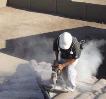
The newly downloadable document addresses methods for controlling silica such as wet cutting during construction operations and using vacuum dust collection systems.
A panel presentation and discussion on "The State of the Granite Debate," focusing on the issue of radon and radioactivity from granite countertop materials, will be part of AARST's 21st International Radon Symposium next week.

With more participation this year than ever before, more than 100 radio stations in some 20 states are planning to help raise awareness of mesothelioma by playing a Warren Zevon song followed by a 20-second segment about the incurable disease on Saturday, Sept. 26.
The settlement is related to a release at the company’s ammonia and nitric acid manufacturing facility in Deer Island, Ore., on Sept. 29, 2008. EPA alleges that the company failed to notify the appropriate emergency response entities until approximately 11 hours after the release occurred.
In addition to issuing willful, repeat, and serious citations to the company, OSHA also issued it a notice of failure-to-abate citation relating to its failure to implement a respiratory program, institute a medical surveillance program for workers overexposed to chromium VI, and develop and implement a hazard communication program for workers exposed to caustics and corrosives.