Special impact inspections, which began last April following the explosion at the Upper Big Branch Mine, involve mines that merit increased agency attention and enforcement due to their poor compliance history or particular compliance concerns.
The standard specifies the minimum amount of background and retro-reflective material and the performance characteristics for such materials used in construction of public safety vests.
OSHA opened its inspection of A.C. Castle Construction upon observing employees working without fall protection on the building's roof and on a ladder jack scaffold, exposing them to falls of nearly 19 feet.
In September 2010, a worker with The Warehouse Co., a subcontractor of Winter Park Construction Co., fell approximately 21 feet to a concrete surface while passing furniture from a debris container mounted on the forks of a powered industrial truck.

Taking place April 25-29, the Construction Safety Week will include presentations addressing accident prevention, new concrete requirements, safe use of scaffolds, and safety in demolition.
The planned inspection found that employees working on or around hazardous machinery were not properly protected.
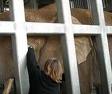
The organization's petition is itself elephantine, filling 240 pages with exhibits, articles, and appendices, one of which is a proposed regulation.
The forum will be chaired by NTSB Board Member Robert L. Sumwalt and will focus on issues such as government oversight, carrier operations, driver training and licensing, driver safety and health, and enhanced vehicle safety technologies.
OSHA initiated an inspection in October 2010 in response to a report of accidents at the facility, one in which an employee lost fingers in machinery and another in which an employee lost a foot in a forklift incident.
Oral arguments on March 31 will be made as the commissioners decide whether four violations by Cumberland Coal Resources, LP were not "significant and substantial."
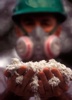
"The NIOSH roadmap outlines a strategic framework for designing, conducting, and applying the research that will best serve the need to address persistent scientific uncertainties about occupational health and elongate mineral particles," said Director Dr. John Howard.
OSHA found that maintenance employees whose duties involved opening and closing rooftop skylights were exposed to falls due to the lack of access stairs between flat and sloped roofs atop the building.
OSHA is citing the company with 16 serious violations, including failing to use lockout/tagout procedures for energy sources and provide railings for unguarded open-sided floors.

Published in the Federal Register on March 25, the regulations implement the Americans with Disabilities Act Amendments Act of 2008. EEOC also changed the Interpretive Guidance, known as the Appendix.
The principal change in the Federal Railroad Administration's new proposed rule is specific limits for nighttime operations -- that is, work between 8 p.m. and 4 a.m.
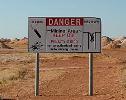
The publication issued on March 22 will help jurisdictions that lack them align their national regs with internationally harmonized best practices, the organization says.

Any small business interested in participating in one of the teleconferences should contact Regina Powers at [email protected] by April 4.
Under the new system, FHWA will replace the narrative with an actual grid of 23 specific inspection program areas to identify potential safety challenges more easily.
Regarding the injury, OSHA found that the company failed to block the steam line to prevent any potential release of steam or hot condensate.
OSHA's inspection found that three of the four printing presses in use at the plant lacked machine guarding to protect operators and other workers against being caught in the presses' points of operation.