
Several Tennessee safety groups are taking part tomorrow at Bumpus Harley Davidson in Murfreesboro, with a motorcycle training, road tests, and a bicycle safety course for kids.
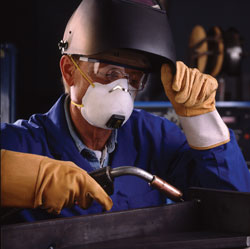
On Feb. 23, 2009, a federal appeals court resolved the final challenges to the Occupational Safety and Health Administration’s Hexavalent Chromium (CrVI) Standard that was promulgated in February 2006. The last challenge argued to lower the permissible exposure limit (PEL) to 1 μg/m3 from 5 μg/m3. This appeal was denied, and OSHA’s PEL was upheld by the court.

Because products used in a nail salon may be extremely flammable, no one should be allowed to smoke in the vicinity. As required by OSHA, employees should be provided training on hazard communication (OSHA 29 CFR 1910.1200) and on the proper storage and handling of flammable liquids (OSHA 29 CFR 1910.106).
For users, the key to the new ANSI/ISEA 201 standard is a label that will provide information to make garment selection based on the work environment and tasks.
The 10th annual National Work Zone Awareness week was held April 6-10, 2009, with "Drive to Survive—Our Future is Riding On It!" serving as the week's theme. The national kickoff took place April 7 on the George Washington Parkway near a bridge replacement project between Washington, D.C. and Virginia, a fitting location given the federal government's stimulus of infrastructure projects this year. More money brings more work zones, more (temporary) congestion, and more risk.
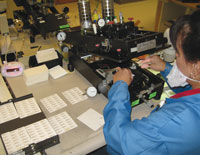
Beryllium is the fourth element in the periodic table. It comes right after lithium and before boron. It's a metal that looks like aluminum but is lighter and stronger. In ceramic form, beryllium oxide (BeO) conducts heat but not electricity and has the highest thermal conductivity of commercially available ceramics. It is used in everything from wireless base stations to satellites and advanced radar systems.

Analyzing 1,285 deaths in 1992-2007 of workers who died while performing tree care or maintenance, NIOSH found 38 percent were self-employed. While 34 percent died from falls, another 14 percent were electrocuted.
Inspectors identified other hazards including locked exits, obstructed exit access, and an unmarked exit; lack of welding screens and personal protective equipment for welders; untrained forklift operators; excess carbon monoxide levels from forklifts; and numerous electrical safety deficiencies including exposed live electrical parts.

The agency's acting director, Dr. Richard Besser, said the travel advisory will be issued this afternoon. But "it's quite premature" to advise restricting travel to the United States, he added.

The International Powered Access Foundation said a "radical re-examination of harnesses used by female operators of boom-type mobile elevating work platforms" is needed. Norguard Industries Inc. introduced the Go Pro-Girl™ line for women, shown here, on April 16.

Texas Mutual Insurance Company launched it in Lubbock on a trial basis with several participating employers. "Workplace Accidents Are a Pain. Work Smart" is the theme, and a free movie ticket can be earned by taking a safety quiz.
Five work-related deaths on farms this year -- half of all workplace fatalities in Ireland thus far in 2009 -- prompted a two-week inspection campaign that ended Monday. The Health and Safety Authority also issued a new guidance document warning performers about hearing loss.
Three items alleging the employer failed to provide guardrails on painters' scaffolds are now back for an administrative law judge's consideration. They've been litigated for years.
The Georgia Local Section of the American Industrial Hygiene Association, the American Society of Safety Engineers' Georgia Chapter, and the Georgia Tech Research Institute's Occupational Safety and Health Division are taking part.
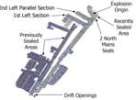
The agency yesterday asked coal mine companies to offer help in the research, which will examine methane accumulation in sealed areas like the one that exploded in the Sago Mine, depicted here, in January 2006.
The company disclosed more than 680 violations of water, air, hazardous waste, emergency planning and preparedness, and pesticide regulations to EPA after auditing 12 facilities it acquired from DuPont in 2004.
The application period is April 15 to May 20 for $510 million being awarded in this program, which is more vital now than ever for fire and EMS departments as local budgets shrink.

Not among the 73 finalists was Daniels Corporation International Pty Ltd's Sharpsmart system, the entry shown here, which is designed to reduce the risk of sharps injuries and minimize impact on the environment.