Cooling a person's body within six hours of cardiac arrest with successful CPR might improve survival and lessen brain damage, according to a new Cochrane review.
OSHA is on the fence about it. According to the director of its Enforcement Programs Directorate, the agency’s determination of coverage would be made on a case-by-case basis.
Flu-like cases are widespread in Ireland, Israel, Belgium, the Netherlands, the United Kingdom, and Cypress, with flu activity in Japan continuing above what is usually seen during flu season, WHO reports.

According to the October issue of Annals of Allergy, Asthma & Immunology, an apparent allergic reaction after an immunization should be investigated rather than avoiding future immunizations, which could leave patients at greater risk of disease.
When asked if it was acceptable to throw out items contaminated with blood or body fluids in either septic systems or normal garbage, the OSHA director said, “It is the employer's responsibility to determine the existence of regulated waste. This determination is not based on actual volume of blood, but rather on the potential to release blood (e.g., when compacted in the waste container).”

Jukka Takala, director of the European Agency for Safety and Health at Work, is inviting stakeholders to use its new blog and sharing his views about enforcement, persistent risks, occupational diseases, and more in 28 short videos.
The Food and Drug Administration recently ordered manufacturers of certain types of pedicle screw systems, called dynamic stabilization systems, to conduct postmarket surveillance studies to collect clinical data on a number of potential safety issues, including fusion rates and frequency of additional surgeries.
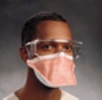
The Association of Occupational Health Professionals in Healthcare's alliance with OSHA brainstormed the idea during a conference call that included NIOSH’s National Personal Protective Technology Lab.
The National Transportation Safety Board is offering a three-day course,titled "Transportation Disaster Response - A Course for Emergency Responders," at the NTSB Training Center in Ashburn, Virginia (near Washington, D.C.) on Nov. 17-19, 2009. The course is being facilitated with the full participation of the New Jersey State Police.
Surgical masks appear to be no worse than, and nearly as effective as N95 respirators in preventing influenza in health care workers, according to a study released early online by JAMA. The study was posted online ahead of print because of its public health implications. It will be published in the Nov. 4 issue of JAMA.
Two interactive computer tools released by HHS' Agency for Healthcare Research and Quality will help emergency planners and responders select and run alternate care facilities during disaster situations. In such instances, hospitals experiencing a surge in seriously ill patients requiring acute care may need to transfer less ill patients efficiently to alternate care sites.

More than 70 state employees have walked more than 1 million steps so far. Gov. Dave Heineman met Oct. 2 with state workers who have reached their walking goal of 360,000 steps.
"The process of pandemic planning may be unfamiliar to many organizations," said Safety Services Canada President Jackie Norman. "We felt it was necessary to create a course that would answer important questions and give employers a solid foundation regarding H1N1 flu prevention in the workplace."
Get Smart About Antibiotics Week begins today and runs through Oct. 11. This annual effort coordinates the work of Centers for Disease Control and Prevention's Get Smart: Know When Antibiotics Work campaign, state-based appropriate antibiotic use campaigns, nonprofit partners, and for-profit partners during a week-long observance focused on antibiotic resistance and the importance of appropriate antibiotic use.

According to CDC's Morbidity and Mortality Weekly Report, many people who have died from 2009 H1N1 influenza in the United States had co-infections with a common bacteria, Streptococcus pneumoniae or pneumococcus.
A study on the self-reported health of Americans ages 18 to 64 revealed that the flu is responsible for 200 million days of diminished productivity, 100 million days of bed disability, and 75 million days of work absence. Each episode of illness translates into five to six days of symptoms and between a half-day and five days of work missed.
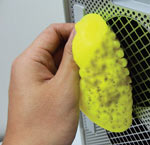
It has been seven and a half years since the University of Arizona indelibly changed much of corporate America's lunch habits by releasing its landmark revelation that the average office desk harbors 400 times more disease-causing microorganisms than the average toilet seat. Even prior to that skin-crawling announcement, though, Meinrad Flury, CEO of the Switzerland-based Joker AG, was busy in his laboratory trying to perfect a substance that could clean and disinfect such tricky-todegrime equipment as computer keyboards, mice, and other components, which, as it turns out, are bacterial hotbeds all.
The Food and Drug Administration recently announced the availability of the first draft guidance for industry on Risk Evaluation and Mitigation Strategies (REMS), titled "Format and Content of Proposed Risk Evaluation and Mitigation Strategies (REMS), REMS Assessments, and Proposed REMS Modifications," which are required for certain drugs or biologics.
They're the front lines and the heart of the nation's defense against the H1N1 flu, and the care they provide will be vital during the 2009/2010 U.S. flu season. How well the employees of about 5,000 hospitals can perform their duties may depend on those individuals' willingness to receive flu vaccinations, as health care professional associations and leaders of this year's Joint Commission Resources Flu Vaccination Challenge 2009-2010 strongly encourage.
Many companies kick back reflexively during tight times, like a crossed knee tapped by a rubber mallet.