"This precedent-setting agreement will go a long way in protecting the interests of workers employed by this farm, as well as others in the industry," said Patrick Reilly, director of the division's Southern New Jersey District Office.
Novo Nordisk Inc., a Danish drug maker, agreed to pay that amount to resolve its civil liability for illegally promoting a hemophilia drug for treating traumatic bleeding of combat casualties.
OSHA initiated an inspection on Feb. 1 as part of its National Emphasis Program on Amputations. As a result, the company was cited for 18 serious violations.
The Federal Motor Carrier Safety Administration's change means that drivers returning cargo containers to the equipment provider won't have to file a written report if they found no defects in that equipment.
Saehaesung Alabama has been cited for two willful violations for failing to develop, document, and utilize lockout/tagout procedures for energy sources, and to provide workers with the knowledge and skills necessary for safe usage and removal of energy control devices.
The willful violations address the company’s failure, from 2007 to 2010, to record standard threshold shifts on the OSHA 300 Log when employees’ hearing tests revealed that they experienced a work-related STS and the employees’ total hearing level was 25 decibels or more above audiometric zero.
The owner and manager of a California condominium complex were sentenced for conspiring to violate the Clean Air Act’s asbestos work practice standards during the renovation of a 204-unit apartment building in Winnetka, Calif., in 2006 – work that caused asbestos to be released into the complex and the surrounding community.

In 2008, OSHA issued more than $1 million in fines against the two companies now on trial in a Colorado federal court.
OSHA's investigation, which began in December 2010, resulted in the issuance of citations 27 serious and three other-than-serious violations.

The food services sector was one of the few U.S. economic sectors still growing in May 2011. A National Council of La Raza analyst says vulnerable workers in the industry are pressured to hide injuries and forgo treatment, however.
DOT requires any advertising that includes a price for air transportation to state the full price to be paid by the consumer, including all carrier-imposed surcharges.
A willful violation was issued due to the company permitting employees to install trusses of approximately 35 feet at the leading edge of the building without safety nets or personal fall arrest systems.
The citation for a willful violation, carrying $61,600 in penalties, was issued after inspectors observed employees working without fall protection on a commercial roof at a height of nearly 32 feet.
OSHA found that The Hartford's data center policy required electricians employed by its maintenance contractor, Grubb & Ellis, to perform work in live electrical panels for computer equipment without first de-energizing the panels.
Shareholders of the coal company that crossed swords with MSHA after the Upper Big Branch explosion approved the merger, as did shareholders of acquiring company Alpha Natural Resources, Inc.
This new National Emphasis Program aims to protect workers from chemical and physical hazards. Some are exposed to metal dusts and fumes, carbon monoxide, lead, and silica, according to inspection and BLS data.
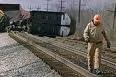
The agency has removed "non-train incident" involving non-employees who are injured while off railroad property from the definition of "Event or exposure arising from the operation of a railroad."
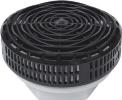
The agency said there were media reports of 55 pool and spa drownings and 63 near-drownings during the first five months of 2011. Its "Pool Safety: Simple Steps Save Lives" campaign resumed May 26, in time for Memorial Day.
Serious violations include failing to ensure the safe and proper use of step ladders, to keep floor surfaces free of water to prevent slipping or sliding, and to provide an adequate and timely emergency response plan for night shift workers.
The repeat violations include a lack of guardrails on work platforms greater than 4 feet above the ground, a lack of eyewash and shower, and unguarded machinery.