
Recommendation #6 from the Chemical Emergencies Work Group supports a bill using an approach to inherently safer technologies (IST) that the U.S. chemical industry opposes.

An Oct. 19 seminar and Oct. 20-21 symposium are in Kansas City, Mo., sponsored by the NFPA and its affiliated Fire Protection Research Foundation, will include a case study by Imperial Sugar's vice president of Manufacturing & Engineering.
The U.S. Chemical Safety Board is responding to a congressional mandate for a yearlong, $575,000 study by the National Academy of Sciences on how to reduce or eliminate the stockpile at Bayer CropScience's plant in Institute, W.Va.

The event is part of a campaign designed to raise public awareness of indicators of terrorism, crime, and other threats and emphasize the importance of reporting suspicious activity to the proper transportation and law enforcement authorities.

Hurricane Earl, a Category 2 storm this morning, now poses little danger to the U.S. eastern seaboard. But the hurricane season isn't over, and other threats are out there.
Professionals now can rely on a uniform rating system when evaluating lighting equipment.

Ninety-one percent of businesses surveyed in 2007 by The Ad Council said it is "very" or "somewhat" important to take steps to prepare for a catastrophic disaster. Yet many companies fail to prepare.
An antibacterial enzyme found in human tears and other body fluids could be applied to certain foods for protection against intentional contamination with anthrax, scientists reported at the 240th National Meeting of the American Chemical Society.
The Federal Emergency Management Agency's U.S. Fire Administration (USFA) issued a special report examining the characteristics of fatal fires in residential buildings. According to the report, an estimated 1,800 fatal residential building fires occur annually in the United States, resulting in an estimated average of 2,635 deaths, 725 injuries, and $196 million in property loss.
The board also released a 15-minute safety video titled "No Escape: Dangers of Confined Spaces," which includes a detailed animation depicting the tragedy that unfolded at Xcel's Cabin Creek plant on Oct. 2, 2007, taking the lives of five contractors.
DHS seeks the information from 1,274 "high-risk" facilities that may sell, transfer, or commercially apply products, such as pesticides and fertilizers, that contain chemicals on the agency's list.
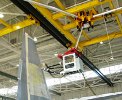
According to its developers, the design's precision maneuverability throughout a large space and ability to be outfitted with a large variety of tools make it ideal for this type of application.

Following a review undertaken because of challenges presented by the H1N1 flu vaccine, the department wants a better pipeline to move vaccines, medical equipment, and supplies for medical emergencies.

An online survey of 1,058 adults by the American Red Cross found about 20 percent would try to contact responders via e-mail, websites, or social media if unable to reach 911. Most believe help will come soon after they tweet or post an urgent request.
Finalizing a proposed rule to incorporate more than 40 voluntary consensus standards in federal pipeline safety regulations, PHMSA said it will not adopt the 2008 editions of NFPA 58, Liquefied Petroleum Gas Code, and NFPA 59, Utility Liquefied Petroleum Gas Plant Code.
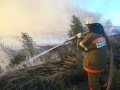
EMERCOM, the agency that includes the Russian State Fire Service, reported 129,161 people and 19,343 pieces of apparatus were fighting the 589 fires active on Aug. 5 in the country.
The purpose of the SPCC rule, which was finalized in 1973, is to establish requirements for facilities to prevent a discharge of oil into navigable waters or adjoining shorelines.
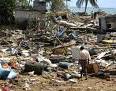
INTERPOL is working with five European partners to create FASTID, which became a priority after the Asian tsunami on Dec. 26, 2004, killed at least 227,000 people.
Held in Reno and sponsored by MSHA, the national contest features 38 teams from 16 states. Awards will be presented Thursday.
It recognizes business units that maintain a total injury frequency rate of less than 10 and a lost-time injury frequency rate of less than one per million man-hours worked.