
In 2008, OSHA issued more than $1 million in fines against the two companies now on trial in a Colorado federal court.
OSHA's investigation, which began in December 2010, resulted in the issuance of citations 27 serious and three other-than-serious violations.
The deal secures a strategic position in a region that is expected to experience significant growth in the industries both companies serve, according to Capital Safety.
Each year, numerous children and adults are injured or killed while engaging in recreational pursuits at active and abandoned mine sites across the country.
OSHA found that employees installing a new sewer line were exposed to engulfment hazards while working in an 8-foot-deep trench without any protective system in place.
At the work site, welding equipment ignited flammable gases and caused a flash fire resulting in second and third degree burns to the face and head of the welder working inside the steel pipeline.
Besides infection and allergic reactions, excessive mold growth indoors can result in offensive, musty odors from the gases released by certain molds as they grow and die.
OSHA has cited PolyChem Services Inc. for one safety and five health violations after a worker received second- and third-degree burns at the plant in November 2010.
The industry's major names are here in Portland and, from the looks of things so far, they brought their best with them.
At least 26 U.S. workers were killed in grain entrapments last year, and the number of entrapments is increasing, according to researchers at Purdue University.
An employee of contractor Mollenberg-Betz Inc. was performing welding atop a 10,000 gallon slurry tank when hot sparks ignited flammable vapors inside the tank, causing an explosion that killed him and injured another Mollenberg-Betz employee.
Federal inspectors issued 20 withdrawal orders and five citations to Randolph Mine in Boone County, W.Va., during an impact inspection conducted in April, and the company quickly announced three days of safety stand downs.
MSHA will conduct four public hearings on two proposed rules: "Examinations of Work Areas in Underground Coal Mines" and "Pattern of Violations." Each hearing will cover the major issues raised by public input in response to the proposed rules.
"Our inspections found maintenance workers exposed to a variety of health and safety hazards while performing their duties, including stripping paint, removing drywall, and clearing basements of raw sewage that had backed up during heavy rains," said Kay Gee, OSHA's Manhattan area director.

The final rule deals to a significant extent with lockout/tagout. It was published on Monday and will take effect Aug. 1, 2011. The LOTO provision becomes effective and enforceable Oct. 31, however.
While inspecting the site, OSHA found that two trenches—including the one in which the injured employee was working—lacked cave-in protection, as neither had a trench box or shield system.
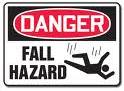
Construction falls and trench collapses might occur at any time during the year, but they typically peak during the summer.
"Eliminating safety barriers and failing to develop emergency plans because they are inconvenient or time-consuming is no excuse for endangering employees," said William Fulcher, director of OSHA's Atlanta-East Area Office.
An OSHA inspector was performing a work site inspection when he directed an employee to exit the trench, believing collapse was imminent. Within five minutes the trench collapsed and could have buried the worker under 6 to 7 feet of soil.
OSHA's Dallas Area Office began the investigation Oct. 10, 2010, at the plant after workers were injured while vacuuming explosive dust to clean out a natural gas processing unit.