
Airborne pathogens are not only highly contagious, but also they can put a workforce completely out for weeks at a time.

NIOSH published "Criteria for a Recommended Standard: Occupational Exposure to Crystalline Silica" in 1974, recommending there that same exposure limit OSHA has proposed -- 50 micrograms per cubic meter (μg/m3).
All 86 workers evacuated safely, but 13 were treated for smoke inhalation during the Feb. 5, 2014, incident. Many workers had trouble donning their self contained self rescuers, according to the report.
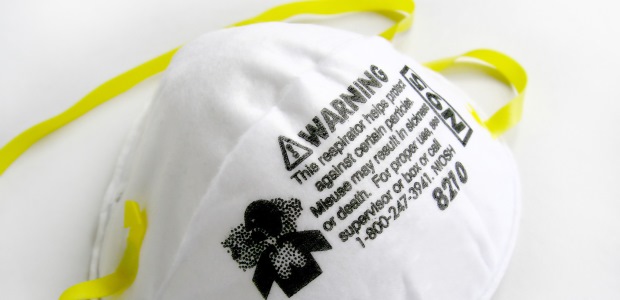
A new request for information and comments asks whether health care end users want requirements and tests in the process to parallel those in FDA's clearance process for surgical N95 respirators.
The agency has issued $185,700 in penalties to Schwan's Global Supply Chain Inc., the manufacturing arm of The Schwan Food Company, after an inspection of its Atlanta plant.
To provide the right protection, it's important to consider the end users, their environment, your evacuation program, and the threats they may encounter.

It covers head-to-toe protection, including charts comparing the protection of various coverall types and chemical-resistant glove options.
The study provides insight into the training and safety awareness of health care workers who routinely are exposed to several specific hazardous agents.
President Kathy Seabrook's comments submitted Jan. 31 endorse the proposed 50 µg/m3 PEL and the 25 µg/m3 action level but say implementation on small, short-term construction sites will be a challenge.

Understanding the potential health risks and correctly classifying the degrees of severity will aid in respirator selection.

The justices agreed with the 7th U.S. Circuit Court of Appeals that protective gear is not distinct from “work clothes.”
The agency has added 15 days, so comments are now due by Feb. 11, 2014. Hundreds of comments have been submitted already.
The 90-minute chat will discuss in detail the rule, which would reduce the agency's PEL for workers' exposure to respirable crystalline silica in general industry, construction, and maritime.

The safety challenges of a booming industry were met on many fronts in 2013, from training and recruitment to regulatory changes and safety stand-downs.

The study found people with chronic obstructive pulmonary disease are about twice as likely to develop mild cognitive impairment.

The section on engineering controls -– local exhaust ventilation, isolation, and dust suppression methods -- states they are likely to be the most effective control strategy for nanomaterials, but it also advises using elimination and substitution first if they are feasible.
The agency's final rule applies for the reporting year beginning Jan. 1, 2014.
OSHA's respiratory regulations require that you have a written program outlining your company's usage of respirators. The program needs to be reviewed annually.

When respirators are used to lower exposure to respirable crystalline silica, employers must establish a written respiratory program meeting the requirements of 29 CFR 1910.134.
The agency has proposed $113,400 in fines against Sherman Brothers Trucking Inc., doing business as Team Transport Inc.