The FR apparel manufacturer's resolutions will help workers and safety managers make sure their safety clothing, equipment, and procedures work as hard as they do in 2015.

With the introduction of updated standards such as NFPA 70E 2015, you need to know what they mean.
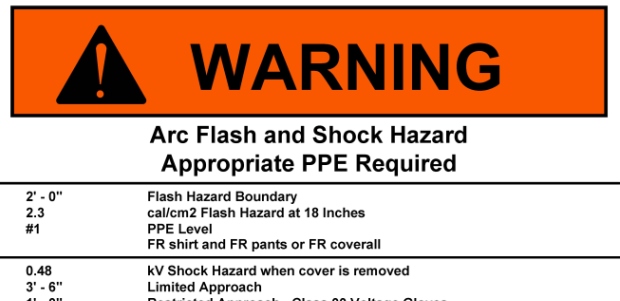
Real-world applications have brought on an increasing demand for garments that are suitable for use in environments with multiple hazards.
OSHA has proposed fines of $174,240 for a lack of fall protection at 3 residential job sites.
A statement from the National Safety Council is directed toward health care employers whose workers have a risk of exposure.

Nov. 14 is the comment deadline on the draft standard, which was developed by a panel of technical experts and reviewed by an Advisory Working Group with representatives from organizations that included the National Bomb Squad Commanders Advisory Board, International Association of Chiefs of Police, DHS, and the FBI.
The study will be published in November in the upcoming issue of the Journal of Occupational and Environmental Hygiene.

As thermal exposure increases, the type of FR fiber and fabric plays an increasingly important role in body burn injury and estimated survivability.
A rural NJ fire company is getting new equipment.
Stanhope wins a federal grant of nearly $158,000.
It is extremely important to consider the three pillars of comfort—heat and moisture management; fabric hand; and garment fit/design—when evaluating your options.

As temperatures go up, rates of PPE compliance tend to go down.
ISEA noted the key update to ANSI/ISEA 101-2014 is an expanded sizing chart to accommodate a majority of the working population who wear limited use and disposable garments on a daily basis.
The Connecticut contractor was cited by OSHA in connection with workers' lead and silica exposures, according to the agency.
The citations come after two workers died in falls.
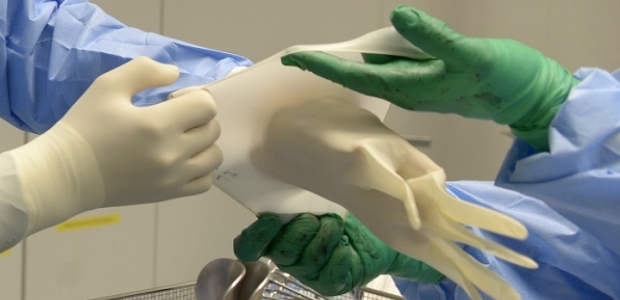
ASTM has formed a task group to develop a specification standard for them, Selcen Kilinc-Balci, a physical scientist for NIOSH's National Personal Protective Technology Laboratory, reported on the agency’s Science Blog.
The agency has cited Cooper Power Systems for allegedly exposing its workers to chemical hazards.

The ministry announced it has spent more than $1.8 million on a robotic mannequin to test protective suits and equipment for Britain's armed forces.
The rule includes significant PPE changes, such as mandating fall harnesses for workers in aerial lifts and requiring that employers provide and pay for FR apparel.

The welding arc creates extreme temperatures and may pose a significant fire and explosion hazard if safe practices are not followed.