Food and Drug Administrator Commissioner Margaret A. Hamburg recently sent a letter to America's health care professionals thanking them for their efforts during the 2009 H1N1 influenza outbreak and providing information on safety monitoring of the 2009 H1N1 vaccines.

The document lays out a four-year strategy to protect public health during a large-scale emergency, such as the H1N1 pandemic. Solutions will be sought for predicted shortages of nurses, epidemiologists, and laboratory personnel.
Dr. William Schaffner, president-elect of the National Foundation for Infectious Diseases, expressed optimism Wednesday that the seasonal flu vaccination rate for U.S. health workers will be higher than in 2008. The peak months for seasonal flu are right around the corner.
Besides filling more than 5 million orders for H1N1 vaccine doses, the Department of Public Health has distributed 7.3 million N95s to 27 counties in California.

Around 80 million doses of vaccine for this virus have been distributed worldwide. The agency says there have been few reports of adverse reactions, including fewer than 10 suspected cases of Guillain-Barre syndrome in people who have received vaccine.
Vaccinations will be offered for those up to five years old, even if they have no underlying medical condition.
OSHA has issued commonsense fact sheets that employers and workers can use to promote safety during the current H1N1 influenza outbreak.

The hottest PPE category this year, respiratory protection, can be challenging to navigate. NIOSH’s site has always been a good information source about these products, and the new Respirator Trusted-Source Information Page is even better.

With the recent outbreak of H1N1 virus around the globe, there has been increased interest in using respirators to help protect people at work, at home, and while out in public. While most people have seen or used respirators, few people truly appreciate and understand how these apparently simple devices actually work and what is required to use them properly in order to receive the expected protection that they can offer.

Many companies introduced new products and initiatives at the Oct. 26-28 expo, and while attendance was mediocre, exhibitors generally were upbeat.
With two separate flu viruses threatening people right now, some doctors fear that those who acquire the H1N1 virus after receiving a seasonal flu shot will blame the shot for their illness and not come back next year.
In response to a request from the Centers for Disease Control and Prevention, the Food and Drug Administration has issued an emergency use authorization for the investigational antiviral drug peramivir intravenous in certain adult and pediatric patients with confirmed or suspected 2009 H1N1 influenza infection who are admitted to a hospital.

The declaration clears hospitals to set up alternate sites to house sick patients. It does not speed up vaccine delivery to the states.
A judge had issued a temporary restraining order on Oct. 16 to halt enforcement of the New York State regulation, but the governor's office said the rule was suspended because of limited supply of vaccines.
As many as 16,000 registered nurses are expected to walk out Oct. 30 at 39 facilities to protest how management has protected them against H1N1. But the backdrop is contract negotiations now in their seventh month.
On Oct. 15, 2009, the Food and Drug Administration (FDA) and the Federal Trade Commission (FTC) issued a joint warning letter to a Web site said to be marketing fraudulent supplements that claim to help prevent the spread of the 2009 H1N1 influenza virus.
The Food and Drug Administration is warning consumers to use extreme care when purchasing any products over the Internet that claim to diagnose, prevent, treat, or cure the H1N1 influenza virus. The warning comes after FDA recently purchased and analyzed several products represented online as Tamiflu (oseltamivir), which may pose risks to patients.
Flu-like cases are widespread in Ireland, Israel, Belgium, the Netherlands, the United Kingdom, and Cypress, with flu activity in Japan continuing above what is usually seen during flu season, WHO reports.
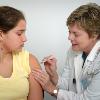
According to the October issue of Annals of Allergy, Asthma & Immunology, an apparent allergic reaction after an immunization should be investigated rather than avoiding future immunizations, which could leave patients at greater risk of disease.

The Association of Occupational Health Professionals in Healthcare's alliance with OSHA brainstormed the idea during a conference call that included NIOSH’s National Personal Protective Technology Lab.