One of the 10 showed how better sizing of fall harnesses could reduce injury risks of construction workers.
The most frequent cause of injury was a slip, trip, or fall resulting in a bruise or contusion, usually to the lower extremities, according to the study.

If you have the right skills, the job could be yours for four years or more.
This is a victory for the American Society of Safety Engineers, secretariat of the A10.40 standard.
OSHA has recently released Ergonomics for the Prevention of Musculoskeletal Disorders: Guidelines for Shipyards, an industry-specific guidance document that provides practical recommendations to help employers and employees reduce the number and severity of musculoskeletal disorders in the workplace.

Their projects may help millions of workers beat Europe's leading cause of work-related illness, EU-OSHA said. Winners received their awards at this ceremony.
Facilities that operate across multiple shifts face a significant challenge when it comes to maintaining the alertness of their employees. According to the National Sleep Foundation, "Sleep deprivation is greatest among shiftworkers, who average only 6.5 hours of sleep compared to 6.8 hours for people on regular '9 to 5' work schedules and 6.9 hours for all respondents."
The company behind a hand-held, FDA 510(k)-cleared automated nerve conduction testing device that is used by thousands of U.S. doctors to diagnose Carpal Tunnel Syndrome (CTS) is still trying to prove its value to insurers. NeuroMetrix Inc. of Waltham, Mass., said last October that about 5,500 physicians' offices and clinics use the NC-stat device in their practices, even as NeuroMetrix works to overcome reimbursement challenges.
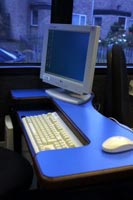
The ability to adapt the workplace to the size variation among computer workers is critical to both promoting users' comfort and protecting their health. While adjustable workstations are commonly thought of in terms of adjusting heights and depths to accommodate differences in sizes of users, it is also important to recognize the importance of adjusting computer workstations to accommodate differences in tasks.
"The problem has a negative impact on the lives of thousands of workers and imposes a significant cost on the economy as a result of lost days at work," said NUPGE, one of Canada's largest labor unions, in a press release.
Rio Tinto is well on its way to automating mine-to-port iron ore operations in Australia. Expected gains include lower costs and better working conditions.
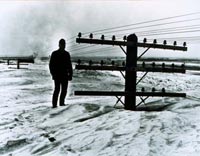
Ergonomic hazards can get dicey when conditions turn icy. Here's some advice.
Cold is relative. Just ask a spouse. The old joke about Floridians firing up their furnaces while, in the same weather, Minnesotans are out gardening in shorts and flip-flops is funny because it's grounded in truth. What is refreshing to one can be uncomfortable to another.
Among the changes, the new standard provides four working postures for reference by designers and seeks to correct the misunderstanding that the 90-degree posture used in ANSI/HFS 100-1988 was "the" correct working posture.
The Canadian Centre for Occupational Health and Safety and the Centre of Research Expertise for the Prevention of Musculoskeletal Disorders have teamed up to co-host Pushing, Pulling, Lifting, and Lowering: A workshop on manual materials handling in the workplace.
Kimberly-Clark’s Conway, Ark., plant reduced its musculoskeletal incidents by 50 percent following installation of an on-site Employee Maintenance Center (EMC). Improvements in reportable incident rates have continued each year since the EMC launched in 2004. At a sister plant 20 miles down the road in Maumelle, reportable incidents fell from eight to zero in the year following the launch of its center.
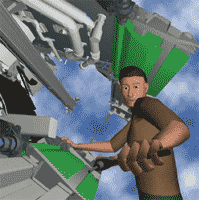
If you don’t know jack about hybrid inertial- acoustic tracking technology, then you probably have not been introduced to Tecnomatix Jack, a human modeling and simulation tool from Siemens PLM Software. Designed to improve the ergonomics of product designs and workplace tasks in virtually any environment, the software features the titular humanoid Jack and his digital cohort, Jill.

Build the processes now that will encourage maximum productivity and minimal errors, employers are told. ASSE has a webinar today to assist.
MSDs are the biggest workplace health problem in Europe, with surveys indicating the problem is growing, according to the ETUC.