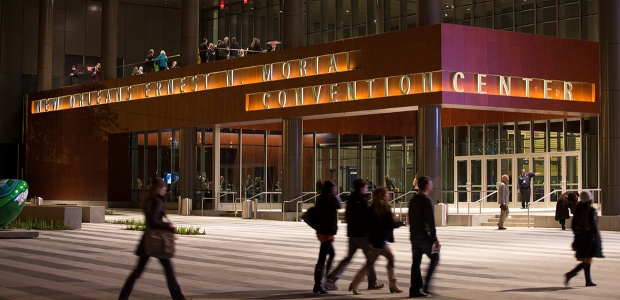
One of the highlights is a June 12 panel discussion on how increased use and legalization of marijuana affect companies' efforts to maintain drug-free workplaces.
The National Security Multi-Mission Vessel, a new class of training ship, will be available to support federal government efforts in response to national and international disasters, such as hurricanes and earthquakes.

NOAA predicts a likely range of 9 to 15 named storms, including 2 to 4 major hurricanes, for the season beginning June 1. An average hurricane season produces 12 named storms, of which 6 become hurricanes, including 3 major hurricanes.
Michael is the first hurricane to make landfall in the United States as a category 5 since Hurricane Andrew in 1992 and only the fourth on record.
"The extensive flooding we've seen in the past two weeks will continue through May and become more dire and may be exacerbated in the coming weeks as the water flows downstream," said Ed Clark, director of NOAA's National Water Center in Tuscaloosa, Ala. "This is shaping up to be a potentially unprecedented flood season, with more than 200 million people at risk for flooding in their communities."
NOAA and the National Weather Service want the public to know that flooding is a coast to coast threat across the United States and its territories during all months of the year.
"Two separate independent engineering reviews indicate that a variety of problems existed at the dam prior to the February 2017 floods. FEMA's Public Assistance can only fund work directly linked to the declared disaster, and so the grant assistance request of $306.4 million was not approved for the upper gated spillway," a FEMA spokeswoman said in an emailed statement.

The new assessment updates one done in 2005. It indicates 161 U.S. volcanoes pose potential threats to American lives and property. The eighteen very highest threat volcanoes are in Alaska, California, Hawaii, Oregon, and Washington, while 39 other volcanoes are high threat, 49 are moderate, 34 are low, and 21 are very low threat.

The 2019 Global Risks Report identifies economic worries, major power tensions, political strains, climate catastrophe, and technological instabilities as areas of concern.
The national waiver allows State Farm to conduct drone operations over people and flights beyond the pilot's visual line of sight through November 2022. Previous waivers State Farm was granted were limited to a short time frame and to specific geographic areas affected by hurricanes.

Wildfires burn twice as much land area each year, on average, as they did 40 years ago, and the threat continues to increase. In 2018, California saw its deadliest and most destructive fire, the Camp Fire, burn more than 150,000 acres and kill 85 people.
The Gulf Research Program was established in 2013 as part of the settlement of criminal charges against two companies involved in the Deepwater Horizon oil spill. The federal government entrusted the National Academies with $500 million to enhance human health, environmental resources, and the safety of offshore energy systems in the Gulf of Mexico region.
The CRTC, which regulates the broadcasting and telecommunications service providers that distribute emergency alerts to the public, set a target that 50 percent of new devices sold in Canada be wireless public alert compatible as of April 2018 and 100 percent as of April 2019.
It calls for designating Virginia's secretary of natural resources as the chief resilience officer of the Commonwealth, a review of the vulnerability of Commonwealth-owned buildings, development of a Virginia coastal resilience master plan, a review of pre-disaster mitigation programs, and a review of compliance with flood protection and dam safety laws.
Hurricanes Florence and Harvey suggest areas that are vulnerable to Atlantic hurricanes could be hit with much more costly and dangerous storms than in the past.

Harris County Judge Ed Emmett shared the lessons learned from the devastating 2017 storm in the Occupational Keynote on Oct. 24.
States participating in the ShakeOut are Alabama, Arkansas, Illinois, Indiana, Iowa, Kansas, Kentucky, Louisiana, Mississippi, Nebraska, Missouri, Ohio, Oklahoma, and Tennessee.

Hurricane Michael was a category 4 hurricane with maximum sustained winds near 155 mph when it came ashore Wednesday close to Mexico Beach, Fla.
Gov. Jerry Brown promised in his veto message to ask the California Seismic Safety Commission and other seismic experts "to provide recommendations that identify an achievable path toward improving the safety of earthquake-vulnerable buildings."
In Austin, 100-year rainfall amounts for 24 hours increased as much as three inches, up to 13 inches. 100-year estimates around Houston increased from 13 inches to 18 inches and values previously classified as 100-year events are now much more frequent 25-year events.