DO you remember the days of the typewriter? Correction tape, carbon paper . . . the days when editing usually meant re-composing your thoughts once again from scratch. The word processing capabilities of the modern computer changed all of that forever, and for the better! However, the ease of today's "copy and paste" functions can sometimes make it too easy to duplicate past directions without visiting appropriate changes.

YOU buy and use fall protection harnesses, lanyards, rope grabs, lifelines, retractables, and other equipment every day. Each item is labeled, ensuring that it conforms to ANSI specifications and OSHA regulations. These product certifications give you confidence and peace of mind.

JUST before Christmas, I went to purchase supplies at a "big box" retailer. As I turned a corner to enter a wide aisle, I saw a narrow forklift coming toward me. It was moving too fast for a retail store. The driver was traveling with forks trailing but looking behind him. He was laughing. I heard no alarm. When the forklift was 20 feet away, the driver was still unaware of my existence. He continued to drive. I screamed. He turned his head.
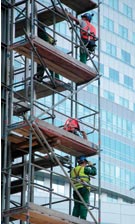
I read the preceding statement while performing a simulated OSHA inspection. Most fall-related injuries result from the lack of fall protection. Additional injuries occur from improper use of fall protection—utilizing a body belt instead of a full body harness, improper use of lanyards, or utilizing an inadequate anchorage point.
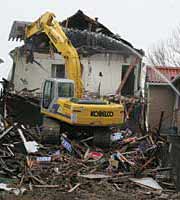
Office Depot recently conducted a survey that found 71 percent of businesses do not have a disaster plan in place. Federal data indicate more than 40 percent of businesses never reopen after a disaster affects them, according to the company. Because 80 percent of its customer base is small to medium-sized businesses, Office Depot considers it important to help them protect their businesses, said Tom Serio, Director of Global Business Continuity Management for the company, which has 52,000 associates and about 1,500 stores worldwide.
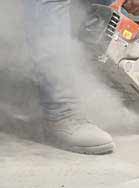
You may not realize that a worker's shoes make him or her more productive, but Tom Votel makes a good case below for the proposition. And if good footwear and inserts can boost productivity, it stands to reason that poor footwear can harm it. Votel, President and CEO of Ergodyne discussed footwear's role in worker productivity during an April 13, 2007, conversation with Occupational Health & Safety's editor. Excerpts from the conversation follow.
OSHA has long required employers to evaluate the workplace for electrical hazards. Most employers are familiar with possible shock hazards, but in recent years, and with the publication of the 2004 edition of NFPA 70E, electrical arc flash hazards are now being assessed and quantified.
WANT to break through vexing problems? By understanding underlying methods of turnaround change in one area, you can apply these strategies to other longstanding challenges.
INTEGRITY First. It’s core value #1 of the U.S. Air Force—embraced by our leadership, taught in our training programs, and a symbol of the commitment and character of the men and women serving our country.
I learned a valuable lesson about the true meaning of integrity only after serving several years in the Air Force. It wasn’t on a combat mission flying an F-16.
MY first exposure to alarm warning situations was watching the robot on “Lost in Space” alert space travelers to immediate danger. The message is the same today: Stop what you are doing, immediately react to the tone and sound, and act accordingly (avoid the hazardous situation by responding correctly). Do your employees know the sounds of safety at your workplace?

TANK overfills. Forklift punctures. Floods. Earthquakes. Willful destruction. Spill response planners are tasked with creating plans for any possible spill incident that could occur at a facility. Often, however, the “best” or “ideal” plan to handle a situation is scrapped because of budgetary, manpower, or space constraints. Sometimes, less-than-perfect plans are developed because plan coordinators aren’t aware of the wealth of resources available in their communities. Acknowledging that the facilities may not need to purchase or store all of the items they could ever possibly need is an important first step toward achieving a more ideal spill response plan.

IN 2005, Bowater Inc., a leading producer of coated and specialty papers and newsprint, stood by its commitment to ensure the safety of its workers at a Grenada, Miss. facility that is Mississippi’s only newsprint manufacturer. Bowater looked to our Electrical Services and Systems district office in Pelham, Ala. to implement its arc flash training, perform an Arc Flash Hazard Analysis to assess its safety needs and concerns, and to coordinate its power systems.

PIPETTE selection is seldom a well-thought-out decision. Rather, it has more to do with the individual preference of the person responsible for ordering or the right salesperson's being there at the right time with the lowest price. However, pipette selection is becoming more critical due to the high cost of work-related injuries and the impact the absence of a scientist can have on a research project.
Without wearing the necessary protective equipment, more injuries and fatalities will occur on the job. This is something Jerry Bach, vice president of Sacramento, Calif.-based Safety Center, Inc., will not tolerate. Wearing personal protective equipment is not only common sense that will keep you alive and safe, it also cuts down on worker's compensation claims, insurance premiums, and personal injury lawsuits for which employers must pay the price.
OUR hands are two the most valuable and widely used tools in the workplace. Proper glove selection is essential in protecting these tools from on-the-job hazards. All too often, workers are faced with a very limited understanding of why hand protection is needed or even how to select a glove properly for their application. The wrong glove often is selected for the job task, which risks injury to the worker or a loss in productivity.
YOU'VE seen the success of safety incentive programs, and you know how to run an incentive program. But your results are never quite what you expected.
Maybe it isn't just the program. In 2004, a company I'll call CVC Industries (a fictional name representing a combination of many companies involved in incentive safety programs) invested considerable time and energy in developing a safety incentive program to improve driver safety. Although initial results were good, driver participation fell off quickly and the program ended without a whimper. What went wrong?

MORE than ever, construction companies are under pressure to provide both employees and subcontractors with effective safety training. OSHA and many states mandate safety training for employees, and recent laws such as California’s AB 1127 hold contractors responsible for the safety of on-site subcontractors. Adding to the incentive to provide safety training for workers is the realization by most companies that helping to ensure employee safety is simply good business.