Top Features


Women have about four times as many foot problems as men. High heels are partly to blame, but also the serious lack of legitimate female fitting options available in the safety footwear market. (Steel Blue photo)

One Pair for Life

Underfoot comfort needs to be the first consideration when choosing your next pair of safety boots.

Protective tools could remove workers

Curbing Hand Injury Risks

Training, communication, on-the-job coaching, and employees' involvement are key components to keeping hand safety awareness top of mind.

Class A kits are designed to offer greater access to the items needed to treat most common types of workplace injuries, while Class B kits feature a broader range and quantity of supplies to treat injuries in more complex or high-risk environments.

How ANSI is Leading the Way to Better First Aid in the Workplace

Recent changes to ANSI/ISEA Z308.1 are a holistic shift in our nation's approach to occupational injury preparedness.
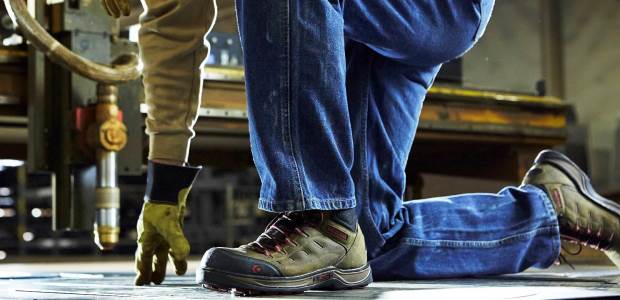


Both aluminum alloy and composite (plastic resin) caps are used because they are less heavy, while composite caps have the added benefit of not conducting heat or cold, thus enhancing internal foot comfort. (Wolverine Brand photo)

Comfort, Quality, Durability: Keys to Effective Protection

Not all occupational footwear that is protective involves formal ASTM ratings and testing procedures. Three of the most important of these are waterproof, insulated, and slip-resistant footwear.

It has been proven that companies with higher employee engagement often outperform their competitors.

Safety Communications for Today's Workforce

In order for this transition to take place, companies cannot pick and choose which safety procedures to enforce—consistency is key.

When securing first aid instructors, it is highly recommended you engage certified instructors who have real-world response experience.

First Aid Readiness: Information, Preparation, Assessment, and Response

With such a broad description for OSHA first aid compliance, the responsibility of defining the various components of first aid response and preparedness lies solely on the employer.

When the work is challenging and days at height are long, worker satisfaction greatly depends on how comfortable they are, both on the job and once they have returned home at the end of the day. (Capital Safety photo)

Workers Not Always Using Their Fall Protection Equipment?

Here's how companies can improve workers' safety harness compliance.

Health effects of breathing welding fumes include eye, nose, and throat irritation; possible lung damage; various types of cancer; kidney and nervous system damage; and suffocation when oxygen-displacing gases are involved in welding in confined or enclosed spaces.

Keep An Eye on Welding PPE

The OSHA mandatory standard specifies both eye protection and protective clothing for welders.

This photo is a complete view of the DFTO system. (Dürr Systems, Inc. photo)

How Thermal Oxidation Can Increase the Sustainability of a Chemical Plant

For this manufacturer of organic chemicals operating many smaller processes, a single centralized thermal oxidizer system was the most cost-effective path to expand production while meeting new emission controls requirements.

Marine Corps Gunnery Sgt. Kwan Cochrane, the maintenance administration chief with Marine Fighter Attack Training Squadron 501, was selected to receive the Geico Military Service Award. The award spotlights the valuable and lasting contributions made by enlisted service members. (Marine Corps photo by Cpl. Jonah Lovy)

Marine Gunnery Sergeant Wins Geico Military Service Award for Fall Protection Program

"Marines always have safety in place, but it was not an official program. I built the program up from scratch and it became necessary for us to have a fall protection system here for working on the jets."Marine Corps Gunnery Sgt. Kwan Cochrane said.
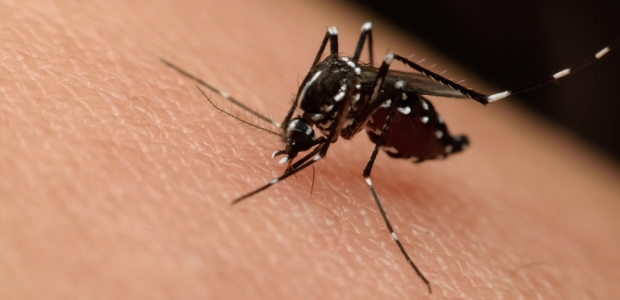
Ebola No Longer a Public Health Emergency of International Concern

WHO Director-General Dr. Margaret Chan on March 29 terminated the temporary recommendations issued in response to the West Africa outbreaks.

This final rule updates eye and face protection requirements in OSHA

OSHA Final Rule Updates Eye and Face Protection Standards

Employers are not required to update or replace protection devices solely because of this new rule and may continue to follow their current and usual practices for their eye and face protection.

Hundreds of thousands of Americans who receive a drone for Christmas 2015 should register them almost immediately, FAA announced Dec. 14, 2015.

FAA Expects Drone Sales to Triple By 2020

Commercial sales will rise from 600,000 in 2012 to 2.7 million by then, its annual Aerospace Forecast Report for 2016-2036 shows.

First 'Deepwater Horizon' Movie Trailer Released

The debate already has begun about whether the movie cynically exploits the families of the workers who died or portrays them and the catastrophe honestly.

Tethered logging operations must be planned by the operator and the competent person on how to safely operate on slopes more than 50 percent, taking into consideration the experience of the operator; limitations of the machine and soil conditions; direction of travel; requirements for turning the machine on slopes; weather; load sizes; method and adequacy of anchorage; and any other adverse conditions.

Oregon OSHA Revises Guidelines for Tethered Logging

Employers intending to use winch- or cable-assisted systems for steep slope logging must ensure that the harvesting machine was specified by its manufacturer for operation on slopes of more than 40 or 50 percent or seek a research variance before using the harvesting machine above its slope limit with a tethered system.

@FDNYAlerts

NYC Fire Department Launches 24-Hour Twitter Handle

The department cautioned that @FDNYAlerts does not replace 911 calls and is not a means for reporting emergencies to the department.

FDA stated that, in determining that these products are dangerous and present an unreasonable and substantial risk, it considered all available evidence, which included a thorough review of the available scientific literature and comments received on a February 2011 Federal Register notice.

FDA to Ban Most Powdered Medical Gloves

The ban would not apply to powdered radiographic protection gloves, because FDA is not aware of any powdered radiographic protection gloves that are currently on the market; in addition, non-powdered surgeon gloves and non-powdered patient examination gloves will not be included in the ban and will remain Class I medical devices.

Featured

Artificial Intelligence