The benefits of leveraging data for on-site workers' protection, as well as a company's operations, must be realized.

The best time to prepare a facility's immediate and effective response to hazardous chemical exposure is before it ever happens.

Without mass notification systems, the silence can be deafening and fatal.

Remote operated cameras aid in mitigating risk in construction work.
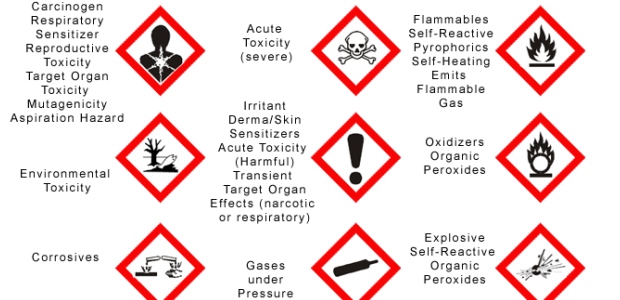
Employees are to be trained when they are initially assigned to work with a hazardous chemical. Additional training is to be done whenever a new health or physical hazard is introduced into the work area.

"Safety is the greatest gift you can give, not only to your family but to those who share the roads with you," said NSC President and CEO Deborah Hersman. "Paying attention, slowing down, and driving sober can ensure you and your fellow travelers make it home for the holidays."
GHS was introduced in Australia in January 2012 with a five-year transition period to give chemical manufacturers and importers enough time to implement the necessary changes. It applies to chemicals with physical hazards, health hazards, and environmental hazards.

Significant education and training investments will be needed as artificial intelligence changes the nature of the work and skills demanded by the U.S. labor market, it says.

The agency announced it is maintaining that rate for regulated motor carriers during the 2017 calendar year.

The Washington State Department of Labor & Industries will adopt rules in 2017 to enforce the new requirement, including procedures for notification to employees and reporting regarding sick leave, and protecting employees from retaliation for the lawful use of sick leave.

"The Department of Transportation believes that investing in this vision for the Northeast Corridor must happen—because rail does more than take us places; it provides us with opportunities and connects us to the future," said U.S. Transportation Secretary Anthony Foxx.

The Federal Emergency Management Agency's Ready Campaign recently offered safety tips for the holiday season, and this year it chose to deliver them via a poem.

"Partnering with the employer community is fundamental to preventing workplace hazards, which is why MIOSHA is pleased to form its first cooperative relationship with Skanska Closner on this exciting project," MIOSHA Construction Safety and Health Division Director Lawrence Hidalgo said.

The association's report showed there were an estimated 16,600 collisions involving fire department emergency vehicles responding to or returning from incidents during 2015 -- the highest number of collisions since NFPA began collecting data on collisions in 1990.

Along with the good news, some of the year's safety and health highlights were bad or even ugly, such as the Bureau of Labor Statistics' confirmation in December that workplace fatalities increased in the most recent fiscal year to the highest number since 2008.

The report describes a cluster of 60 cases of PMF identified in current and former coal miners at one Eastern Kentucky radiology practice during January 2015–August 2016, a cluster that was not uncovered by the national surveillance program.

Winter weather this week across the Midwest and New England is causing agencies to remind motorists to drive carefully and safely, now and throughout the holiday season.