The site groups historically significant, policy-shaping accidents and discusses common themes, with the goal of helping users. The earliest accident on the list happened in September 1959 when a Lockheed L-188A (Electra) plane's left wing disintegrated as the plane flew near Buffalo, Texas.
"Left uncorrected, these conditions expose employees to the ongoing threats of electrocution, lacerations, amputations, fires, falls, chemical burns, hearing loss, and crushing hazards," said C. William Freeman III, OSHA's area director in Hartford, Conn.
The U.S. Centers for Disease Control is reminding the public that National Teen Driver Safety Week begins today and runs through Oct. 25. According to CDC, in 2006, a total of 4,144 teens aged 16-19 years old died, and nearly 400,000 were treated in emergency departments for injuries sustained in motor-vehicle crashes in the United States.
Even with a 4 percent overall decline, there were 43,193 deaths in 2007 -- about 118 per day, according to NTSB's preliminary figures. Some of the agency's recent investigations point out the problem of distracted driving.
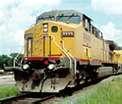
Hailed by Acting NTSB Chairman Mark Rosenker, the bill President Bush signed on Thursday requires Class 1 railroads and passenger railroads to install the technology by the end of 2015 and sets hours of service limits for rail crews.
New federal rules will make the nation's 474,000 school buses safer by requiring higher seat backs, mandating lap and shoulder belts on small school buses, and setting safety standards for seat belts on large school buses, U.S. Secretary of Transportation Mary E. Peters announced on Oct. 15.

The Federal Railroad Administration says the final rule on electronically controlled pneumatic (ECP) brakes will enable locomotive engineers to have better train control, lower the risk of derailment, and allow trains to safely travel longer distances between required brake tests.
Gov. Ed Rendell also signed bills that create a State Board of Crane Operators to oversee licensing and discipline of crane operators and raise the monthly benefit from $125 to $175 for silicosis or black lung sufferers.
Jointly developing interoperable standards, the four -- Union Pacific, Burlington Northern Santa Fe, Norfolk Southern, and CSX -- are "much closer to a safe technology solution," a UP executive says.
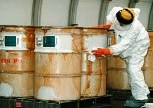
Chemical manufacturers that fail to meet the Dec. 1, 2008, deadline cannot continue manufacturing or importing their chemicals until they have submitted a full registration and paid the registration fee. As of Oct. 1, almost 40,000 chemicals were already pre-registered through the initiative.
Stolen Vehicle Slowdown will help law enforcement and could save lives in police-involved chases of car thieves, General Motors says.
By 2020, ships will be required to use fuel with no more than 5,000 ppm sulfur, a 90 percent reduction from today's global cap
The company, which manufactures sealing and bearing systems for the automotive and aerospace industries, was acknowledged for achievement in its employee safety and health program.
During ATA's annual Management Conference and Exhibition, the board voted to adopt 18 recommendations made by the organization’s Safety Task Force, which was established earlier this year.
The U.S. Fire Administration has issued a special report titled "Highway Vehicle Fires," as part of its Topical Fire Report Series, which examines the causes and characteristics of highway vehicle fires. An estimated 258,500 highway vehicle fires occur annually resulting in 490 civilian deaths, 1,275 civilian injuries, and $1 billion in property loss.
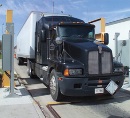
However, for idling reduction devices to qualify for the tax break, they must be determined by EPA in consultation with the Department of Energy and DOT to reduce idling of such vehicles at a motor vehicle rest stop or other location where such vehicles are temporarily parked or remain stationary.
"A digital strategy component allows CBP to reach audiences that are increasingly using the Internet as their source of news and information, especially related to travel," said CBP Assistant Commissioner Thomas S. Winkowski. "The widget, because it sits on the computer desktop, provides an ongoing and interactive reminder to travelers to get appropriate travel documents."
Although communities commonly use sobriety checkpoints and increased police patrols to detect drivers under the influence of alcohol, a new review by the Colorado Injury Control Research Center and the Colorado School of Public Health reports there is not enough evidence to say definitively that these efforts to cut down the number of accidents and deaths from drunk driving.
Idling typically wastes almost a gallon of fuel per hour, puts more wear and tear on an engine than driving, and causes pollution that contributes to ozone smog, fine particle pollution, and increased carbon dioxide emissions, EPA notes.

The Bush Administration is committing almost $90 million over the next eight years to expand capacity at John F. Kennedy International Airport, U.S. Secretary of Transportation Mary E. Peters announced yesterday. She also unveiled new rules designed to lower fares, increase consumer choices, and improve service for air travelers using JFK, Newark, and LaGuardia airports.