The Michigan Department of Transportation's updated information about the safety of 4,400 state highway bridges does not say they are dangerous, but 423 are classified as "structurally deficient" and 901 as "functionally obsolete."

Audit results are part of the data to be shared by the International Air Transport Association, the International Civil Aviation Organization, the Federal Aviation Administration, and the Commission of the European Union.
An inspection conducted under OSHA's Chemical Industry National Emphasis Program resulted in $153,000 in proposed penalties.
Railroads, suppliers, and state and local governments have until July 1 to apply for the grants to deploy interoperable positive train control systems.
ASSE’s "Road Construction Work Zone Safety Fact Sheet" provides work zone safety tips and standards for motorists and workers.
“If a driver is caught with a cell phone in one hand, they'll end up with a ticket in the other,” said Transportation Secretary Ray LaHood. “It's time for drivers to act responsibly, put their hands on the wheel and focus on the road.”
The penalty being sought against Toyota would be the largest civil penalty ever assessed against an auto manufacturer by NHTSA.
The rule, which will go into effect on June 1, 2012, will require interstate commercial truck and bus companies with multiple hours-of-service violations to install electronic on-board recorders in all their vehicles.
NHTSA says distracted or inattentive driving has become a national epidemic, accounting for an estimated 6,000 deaths and half-a-million injuries in 2008. In 2009, more than 200 distracted driving bills were under consideration by state legislatures, and the pace is expected to increase this year.

While many people understand the increased crash risks caused by drivers texting while driving, the lack of understanding about the dangers of hands-free phones remains a challenge, says the council, which has produced a study explaining the limitations of the human brain as it pertains to multitasking.

ATA supports states’ efforts to ban texting by automobile drivers and said it will continue to work with affiliated state trucking associations and stakeholder groups to make that happen.
The free, one-hour event will focus in part on the new A10.47 standard, which covers flagger safety, run over/back over prevention, equipment operator safety, illumination, PPE, and more.

At approximately 10 a.m. on March 25, 2009, an F-22 crashed northeast of Edwards Air Force Base, killing David Cooley, 49, of Palmdale, Calif., a 21-year veteran test pilot. During the days of World Wars I and II, this may have been all too common an occurrence with test pilot deaths occurring weekly, but today, with advances in safety and technology, a test pilot's death happens on the average of once every two to three years.
U.S. Transportation Secretary Ray LaHood announced them Tuesday. One looks at the auto industry as a whole and will be done by the independent National Academy of Sciences. The second, by NASA engineers, will study the problem in Toyotas.
Based on the violations found, total penalties assessed would amount to $125,000 if the employer was in the private sector, but under the law, federal agencies are cited without penalties.
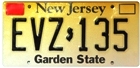
The latest example is a reflective decal that will be required on the front and back license plates of New Jersey drivers who have a Graduated Driver License, as of May 1.
It is estimated that the move in Florida from a secondary to a primary seat belt law, enacted last summer, will save the state 940 lives, prevent almost 150,000 injuries, and reduce costs by $5.5 billion in the first five years alone.
Northwest Airlines flew more than 90,000 passenger flights on multiple 757s that were not in compliance with an airworthiness directive.
EPA said that by issuing complaints it is sending a message to construction site operators, public or private, that these regulations must be met.
According to FMCSA, safety belt use was at 78 percent in states with primary safety belt laws, which allow law enforcement to stop drivers for not using a safety belt, versus 67 percent in states with weaker laws.